
Last updated October 16, 2026
 AC repair
 Heat pumps
 Ductless mini splits
 Trane
Trane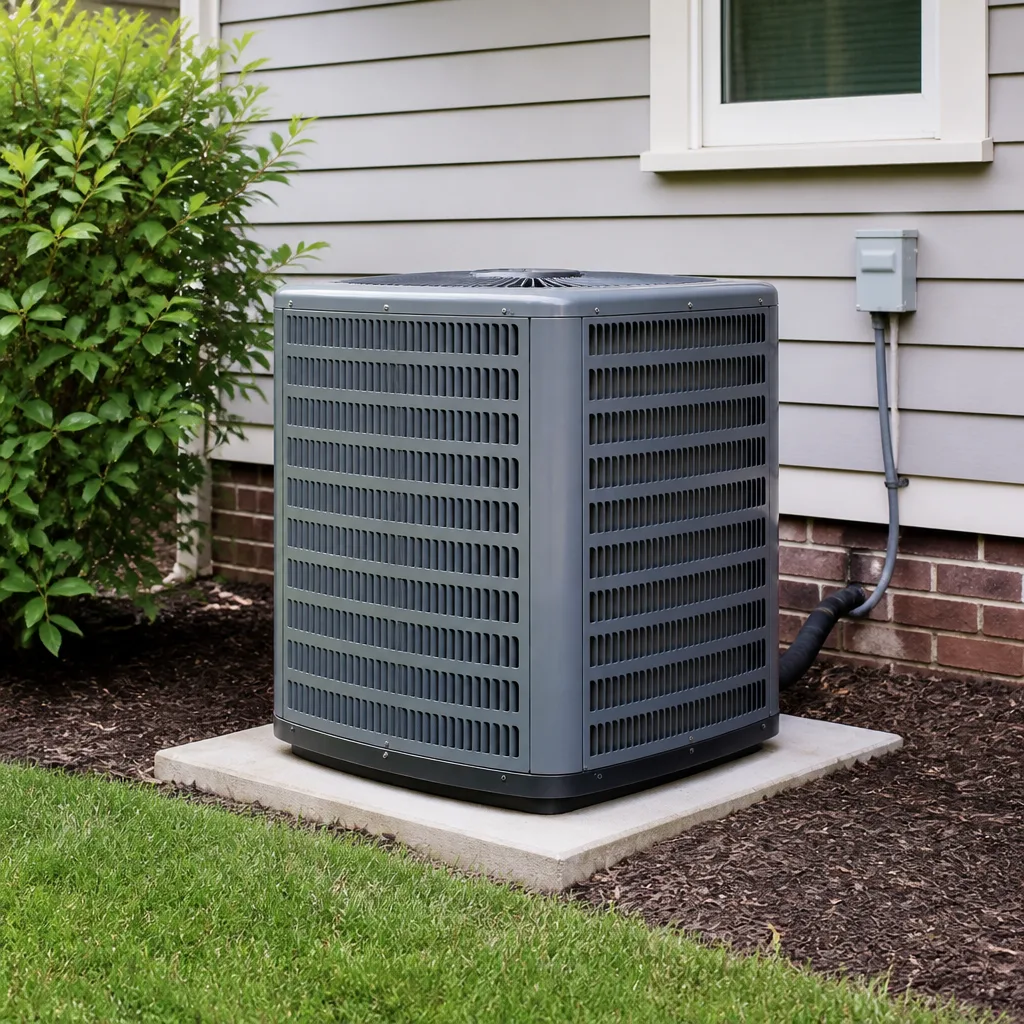 Goodman
Seasonal tune-up and full diagnostic on your Carrier, Trane, or Goodman system - readings shown to you before any repair is proposed
Diagnosis first, numbers second - you approve the repair price before a single part goes in.
Get your free estimateHVAC Warning Signs: A West Palm Beach Homeowner’s Reference Guide
Most HVAC warning sign guides describe problems so advanced the system has basically already failed. By the time a compressor is screaming or a breaker keeps tripping, you’re past the warning stage and into the replacement conversation. This guide is built around the subtler signals: the things you can see, hear, and smell in the first 60 days of a developing problem, when a $180 repair still solves what will eventually become a $1,800 replacement. If you own a home in West Palm Beach, your air conditioner works harder than almost any system in the country, and it talks to you constantly. Most people just haven’t learned the language yet. By the end of this guide, you will have.
Quick Answer
The earliest HVAC warning signs in West Palm Beach are a musty smell from your vents, ice forming on the copper line outside your condenser, a month-over-month electric bill jump of more than 15% with similar usage, indoor humidity above 55% while the AC runs, and any new sound that wasn’t there last season. Most of these show up weeks or months before a full system failure, and catching them early means the difference between a simple repair and a full replacement. Each one points to a specific, identifiable problem.
Styles & brands we work with
Table of Contents
- The Smell Dictionary: Four Odors That Tell You What’s Wrong
- Ice on the Line Set: South Florida’s Loudest Silent Warning
- The Electric Bill Spike: A Diagnostic Signal in Disguise
- The Sound Dictionary: Clicks, Hums, and Hisses
- Indoor Humidity Above 55%: The Threshold That Matters
- Weak Airflow and Hot Spots: The Warning You Can Feel
- Short Cycling: Why a System That Turns Off Is Still Working Too Hard
- Common Mistakes to Avoid
- When to Call a Professional
- Frequently Asked Questions
The Smell Dictionary: Four Odors That Tell You What’s Wrong
A musty smell from your vents on the first cool day of November isn’t your system “waking up.” It is almost certainly mold growth inside your air handler, a direct result of West Palm Beach’s summer humidity and a sign that your drain pan and evaporator coil need immediate attention. In our experience, that first cool front is also when most South Florida homeowners actually notice it, because the AC has been running constantly all summer and the nose tunes it out. Odors are the most underrated diagnostic tool you have, and they fall into four distinct categories.
Musty or Mildewy
This smell means moisture is pooling somewhere it shouldn’t. In West Palm Beach, the usual culprits are a clogged condensate drain line, a cracked drain pan, or biological growth on the evaporator coil itself. When the humidity outside averages above 70% for months at a time, every AC system in the county is fighting a moisture battle. This smell tells you your system is losing. Left alone, that growth spreads into the ductwork, and you’re now breathing it in every time the system runs.
Burning or Hot Dust
A burning smell that appears on the first heating cycle of the season is often just accumulated dust on the heat strips or heat exchanger burning off. It should disappear within an hour. A burning smell that persists, or one that appears suddenly during normal operation, is different: that’s an electrical component overheating, a motor winding failing, or a wire with compromised insulation. If the smell is acrid, like melting plastic, shut the system off at the thermostat and the breaker, and call a professional. Electrical smells do not self-correct.
Chemical or Sweet
A sweet, chloroform-like, or chemical smell usually indicates a refrigerant leak. Refrigerant itself is odorless when sealed, but the oil that circulates with it has a distinct chemical smell when it escapes. If you smell this near your air handler or outside at the condenser, you likely have a slow leak. A refrigerant leak in West Palm Beach is more urgent than in most markets because your system runs so many hours per year: a small leak becomes a low charge becomes a failed compressor faster here than almost anywhere else in Florida.
Rotten Egg or Sewage
Rotten egg smell is the one that requires action before you call anyone. Natural gas is odorless, so utility companies add mercaptan to give it that sulfur smell. If you smell rotten eggs in your home, leave the house immediately, and once you’re outside, call your gas utility’s emergency line. Do not flip switches, do not use your phone inside, do not open windows if it means lingering. This is almost certainly not an HVAC issue, but it travels through vents and can be mistaken for one. After the utility clears the home, then you can call for furnace repair in West Palm Beach to inspect the gas connection at the unit.
What we’ve learned doing this work in West Palm Beach is that smell is the earliest warning you will ever get, often by weeks. A musty odor today is a $150 drain line clearing. That same moisture problem three months from now is a blower motor replacement and mold remediation inside the air handler.
Ice on the Line Set: South Florida’s Loudest Silent Warning
Here’s a sentence that surprises most homeowners: ice on your air conditioner in 90-degree West Palm Beach heat is a sign something is wrong, and it is not a sign your system is “working great.” Air conditioners move heat out of your home. Ice means heat is not moving, and the system is freezing itself instead. The location and pattern of that ice tells you a lot about where the problem is, and you can read it without any tools.
The line set is the pair of copper pipes running from your indoor air handler to your outdoor condenser. The larger pipe, covered in black foam insulation, is the suction line, and it should be cold and sweating, not frozen. When you see ice forming on that pipe, on the condenser itself, or on the copper connections at the outdoor unit, you’re looking at one of three things:
- Low refrigerant charge from a slow leak. This is the most common cause in West Palm Beach, where systems age faster because they run longer.
- Restricted airflow across the indoor coil, usually a clogged filter or a blower that’s not moving enough air.
- A failing metering device that’s not regulating refrigerant flow properly.
The ice pattern is diagnostic. Ice only at the outdoor unit, near the small liquid line connection, often points to a restriction at the metering device. Ice running the length of the suction line back toward the indoor unit suggests a low charge. Ice on the indoor coil itself, visible only if you open the air handler, usually means airflow: a filter so clogged the coil can’t breathe. Here’s the part most guides skip: in a humid coastal climate like West Palm Beach, ice forms more slowly than in dry heat, and by the time you see it, the problem has often been developing for weeks. The humidity feeds the ice while masking the temperature drop that would otherwise alert you earlier.
What should you do if you see ice? Turn the system to “fan only” or shut it off entirely to let the ice melt. Do not keep running it. Ice insulates the coil, which makes the underlying problem worse, and running a compressor with low refrigerant can destroy it. Then call for AC repair in West Palm Beach and describe exactly where you saw the ice. That detail helps the technician arrive with the right diagnostic plan.
The Electric Bill Spike: A Diagnostic Signal in Disguise
Most West Palm Beach homeowners treat a high electric bill as a utility problem. We treat it as a diagnostic signal, and so should you. Your AC accounts for roughly half of your home’s electricity use in South Florida, more than any other single system. When the bill rises more than 15% month-over-month with similar usage patterns, the most likely explanation is not the utility raising rates. It’s your air conditioner losing efficiency.
Here’s the method for reading your bill, and it works whether you’re with FPL or a municipal provider:
- Pull up the last 12 months of bills and look at kilowatt-hours used, not dollars billed. Dollars move with rate changes; kilowatt-hours move with actual consumption.
- Compare this month’s kilowatt-hours to the same month last year. Same-season comparison is the only fair comparison in West Palm Beach, where June and December have nothing in common.
- If usage is up more than 15% and your habits haven’t changed, start listening and looking. The bill is telling you to check the other warning signs in this guide.
What causes an efficiency loss that big? Usually one of these: a refrigerant charge that has dropped 10-15% below spec, forcing the compressor to run longer per cycle; a condenser coil caked with salt, pollen, and West Palm Beach’s particular mix of coastal grime, reducing heat transfer; duct leakage in your attic that’s sending conditioned air into 140-degree attic space; or a blower motor wearing out and moving less air per watt. None of these fix themselves, and all of them get more expensive the longer they run.
We’ve seen systems in West Palm Beach neighborhoods from El Cid to Bear Lakes Club running at 70% efficiency with the homeowner convinced the utility was price-gouging. The fix is a tune-up and diagnostic, not a strongly worded phone call to the power company. A proper AC maintenance in West Palm Beach visit includes a full system performance check that will catch the efficiency killers your bill is hinting at.
The Sound Dictionary: Clicks, Hums, and Hisses
Every air conditioner makes some noise. The problem is separating normal operating sounds from the sounds your system makes when it’s telling you something is wrong. Here’s the sound dictionary we use with customers, translated from trade language into what you’ll actually hear standing in your hallway or backyard.
A single click at startup is normal: that’s the contactor closing, and it’s the AC equivalent of turning a key. Repeated clicking during operation is not. When you hear rapid clicking while the system runs, you’re usually hearing a contactor chattering, which points to a weak coil, a voltage drop, or a failing capacitor that can’t hold the contactor closed. In West Palm Beach, where capacitors age faster due to the heat load, this is one of the most common repair calls we see.
A low hum that continues after the system should have started is a capacitor that’s failed and a compressor or fan motor that can’t start. The compressor is trying, the capacitor isn’t helping, and every minute it sits in that locked-rotor state does damage. If you hear a hum with no startup after a few seconds, shut it down and call. This is different from what customers often describe as a “capacitor hum” during normal running, which is a lower, steadier electrical tone. The tell is whether the system actually starts. If it starts, the sound is likely normal. If it hums and doesn’t start, that’s a failure in progress.
A hissing sound from the indoor unit is usually refrigerant moving through the expansion device, and a soft hiss for a minute after shutdown is normal. A continuous loud hiss or a gurgling sound during operation is refrigerant moving where it shouldn’t be, often indicating a developing leak at the evaporator coil. Gurgling after shutdown is sometimes refrigerant equalizing, which is normal. Continuous hissing during operation is not.
Banging, rattling, or screeching outside at the condenser usually means a fan blade out of balance, a failing fan motor bearing, or debris in the unit. In West Palm Beach, palm fronds, seed pods, and construction debris all find their way into condenser cages. Screeching specifically is a bearing telling you it’s done.
Indoor Humidity Above 55%: The Threshold That Matters
West Palm Beach is one of the most humid cities in the United States. Your air conditioner is not just a cooling machine; it’s a dehumidifier, and it removes moisture from the air as a byproduct of cooling. When your system is running correctly, indoor relative humidity should stay between 40% and 55% while the AC operates. Above 55%, you’re in a zone that supports mold growth, dust mite activity, and that sticky, heavy feeling that makes a 74-degree room feel like 84.
Why 55% specifically? That’s the threshold most indoor air quality standards cite as the ceiling for healthy, comfortable indoor air. Below it, mold spores can’t readily colonize surfaces. Above it, they can, especially on drywall, fabrics, and inside ducts where temperatures stay mild. If your hygrometer reads 55% or higher with the AC running, something mechanical is wrong. The two most common causes in Florida systems are:
- Oversized equipment. A system too large for the home cools the air so fast it never runs long enough to remove moisture. It hits the thermostat setpoint in 10 minutes, shuts off, and leaves the humidity behind. This is common in homes where a previous owner or contractor installed a bigger unit thinking bigger equals better.
- Refrigerant undercharge. A system low on refrigerant runs a colder coil, but it runs shorter cycles and removes less total moisture per hour. The coil is cold enough to cool, not cold enough to dehumidify properly.
There’s a third cause worth naming: a clogged condensate drain that’s backing water up into the drain pan, re-evaporating moisture back into the air stream. It’s the least expensive fix of the three, and it’s the one most often overlooked. If your humidity is high and you have a drain line that’s never been cleared, start there before assuming you need new equipment.
Brandt HVAC Co West Palm Beach sees this pattern constantly in older West Palm Beach neighborhoods where systems from the 1990s and early 2000s are still running. A humidity problem is often the first sign that a system is aging out of its capacity to handle South Florida’s moisture load, even if it still cools.
Weak Airflow and Hot Spots: The Warning You Can Feel
Stand in front of a supply vent with the AC running. You should feel a steady, firm stream of cool air. If you have to hold your hand a few inches away just to feel anything, or if one room in your West Palm Beach home is consistently five degrees warmer than the rest, your system is telling you something. Weak airflow is one of the easiest warning signs to detect and one of the most commonly ignored, because it develops gradually enough that people adjust to it.
The causes, in order of how often we find them in West Palm Beach homes:
- A dirty filter. This is the simplest and most common cause. In a climate where your AC runs 3,000-plus hours a year, a filter can clog faster than the 90-day replacement schedule many homeowners assume. Check it monthly during summer.
- Collapsed or leaking ductwork. West Palm Beach attics regularly hit 130 to 140 degrees in the summer. Flexible ductwork in that heat degrades, and older metal ductwork rusts at the seams. Conditioned air leaks into the attic, and your system works harder to cool a space it’s not even reaching.
- A failing blower motor. Blower motors lose RPM as they age. The system runs, air comes out, but it’s a fraction of the volume it should be.
- A dirty evaporator coil. The coil sits in the air stream, and in West Palm Beach’s humidity, it gets wet every single cycle. Dust sticks to wet coils, and over years, builds a layer that chokes airflow.
The fix for the first one costs the price of a filter. The fix for the fourth can cost several hundred dollars. The rule is simple: if airflow feels weak, don’t wait. Check the filter today, and if that doesn’t fix it, get a professional diagnosis. This is one of those cases where the early $120 repair prevents the $900 one down the road.
Short Cycling: Why a System That Turns Off Is Still Working Too Hard
Your air conditioner should run in cycles: on for 15 to 25 minutes during peak West Palm Beach heat, off for a while, then on again. A system that turns on and off every 5 to 10 minutes is short cycling, and it’s a serious warning sign even though it might seem like the system is “working efficiently.” It’s actually the opposite. Short cycling is the HVAC equivalent of a car that only drives in stop-and-go traffic: maximum wear, minimum efficiency, shorter lifespan.
The three most common causes in South Florida systems are:
- An oversized system, as described above in the humidity section. It cools too fast and never runs long enough.
- A failing capacitor or contactor that interrupts the cycle before it completes.
- A refrigerant undercharge that causes the system to trip its low-pressure safety switch, cutting the cycle short to protect the compressor.
Short cycling matters for two reasons. First, every startup is a spike of mechanical and electrical stress: the compressor pulls locked-rotor amperage for that first instant, the capacitor discharges, the contactor arcs. More starts per hour means more stress per year, and a compressor that should last 15 years might last 8. Second, short cycling means humidity never gets properly removed, because dehumidification takes time. In West Palm Beach, that’s not a comfort nuisance; it’s a mold risk.
If your system short cycles, start by checking your air filter and making sure your thermostat isn’t placed where a supply vent blows directly on it, which causes false temperature readings. If it’s not those, call a professional. This is a diagnostic anyone at Brandt HVAC Co West Palm Beach can run in one visit, and it’s usually a repair, not a replacement.
Common Mistakes to Avoid
- Waiting until the system fails to call anyone. Every repair is cheaper than the repair plus the damage caused by the original problem running unchecked. A refrigerant leak caught early is a reclamation and recharge; caught late, it’s a compressor.
- Ignoring a musty smell because it comes and goes. Mold doesn’t leave. It’s in the system, and the smell is just the part you notice. By the time it’s constant, you’re dealing with a bigger problem that extends beyond the coil.
- Changing the thermostat to “fix” a comfort problem. If you’re setting the thermostat to 70 to get a room that used to feel comfortable at 75, you’re treating a symptom and paying for it on your electric bill. The system is telling you it’s lost capacity.
- Letting a handyman or a “guy who knows ACs” diagnose a system. Modern HVAC, including the Goodman, Rheem, and York units common in West Palm Beach, has enough electronics and refrigerant-specific requirements that misdiagnosis is expensive. Use a licensed professional.
- Replacing the outdoor unit only when the indoor coil is old. Mixing a new condenser with a 12-year-old evaporator coil is a recipe for efficiency loss and early failure. Mismatched systems are a common problem we see in South Florida homes where a previous owner cut corners.
- Ignoring your electric bill because “it’s summer, of course it’s high.” Summer bills are high. Bill jumps of more than 15% with similar usage are diagnostic information. Read the kilowatt-hours, not just the total due.
- Setting the thermostat below 70 to “make it cool faster.” Air conditioners cool at one speed. Setting it lower doesn’t make the house cool faster; it just makes the system run longer, then overshoots. This is inefficient and hard on the equipment.
When to Call a Professional
Call a professional when you smell burning that doesn’t clear in an hour, when you see ice on the line set, when you hear a hum with no startup, when indoor humidity stays above 55% with the AC running, or when your electric bill shows a 15% or greater jump you can’t explain. These are the signals that mean a problem is actively developing, not just a system running less efficiently than it did ten years ago. A diagnostic visit in West Palm Beach typically costs between $75 and $150, and most problems caught at the warning stage can be repaired for under $500. AC repair in West Palm Beach is the gateway call, and it’s always cheaper than the call you make after a total failure. Brandt HVAC Co West Palm Beach offers free estimates in West Palm Beach, and every job starts with a written price before any work begins. Call (728) 220-0996 to schedule a diagnostic.
Frequently Asked Questions
The earliest signs are a musty smell from your vents, a subtle but noticeable drop in airflow, indoor humidity that feels higher than last month, and an electric bill showing a kilowatt-hour jump you can’t explain. These appear weeks before louder, more obvious failures like ice on the line set or a humming compressor. Catching them in the first 60 days, which is the point of this guide, is the difference between a repair and a replacement.
A musty smell that persists after a filter change usually comes from biological growth on your evaporator coil or inside your drain pan, not from the filter itself. In West Palm Beach’s humidity, the coil stays wet for long stretches, and that moisture plus warm air is exactly what mold and bacteria need. The fix is a coil cleaning and drain line clearing, and you can get that addressed through your regular AC maintenance in West Palm Beach visit.
No, ice on your AC is never normal, even on a 90-degree West Palm Beach day. It means heat is not being transferred properly, usually because of a refrigerant leak, restricted airflow, or a failing metering device. Shut the system off to let it thaw, and call for a professional diagnosis before running it again.
A drain line clearing or coil cleaning typically runs $150 to $300. A capacitor replacement usually costs $180 to $350, parts and labor included. A refrigerant leak repair depends on where the leak is: an accessible connection might be $200 to $400, while a leak in the evaporator coil can run $800 to $1,500 with the part. These are the costs of early fixes. Waiting until the compressor fails because of an ignored refrigerant leak typically means a $1,800 to $2,500 compressor or a full system replacement, which is why the warning signs matter. Brandt HVAC Co West Palm Beach gives a written price before any work starts, so you’ll know the number before you approve anything.
The general rule is: if the system is under 8 years old, repair almost always makes sense; if it’s over 12 years old and needs a repair that costs more than 40% of a new system’s price, replacement is worth considering. In West Palm Beach, systems age faster because of year-round runtime, so a 10-year-old unit here has the equivalent wear of a 14-year-old unit in most of the country. A full diagnostic will tell you where you stand, and you should never make that call without one.
Persistent humidity above 55% with the AC running usually means your system is oversized for the home, undercharged on refrigerant, or has a condensate drain that’s backing up moisture into the air stream. An oversized system cools too fast to dehumidify; an undercharged one dehumidifies too little. Both need a professional diagnosis to confirm, and a properly sized system in West Palm Beach should hold humidity in the 40-55% range through a normal summer day.
The Bottom Line
Your West Palm Beach air conditioner warns you before it fails. The musty smell, the ice on the line set, the rising electric bill, the humidity that won’t drop, the sound that wasn’t there last month: these are all messages from a system that’s still repairable. The difference between a $180 repair and a $1,800 replacement is the distance between noticing a warning sign this month and ignoring it until next summer. You don’t need a technician’s tools to catch most of these signals. You need to know what you’re looking at, what you’re smelling, and what you’re hearing, and you need to act before the system decides for you. When you’re ready for a professional opinion, AC repair in West Palm Beach starts with a written price and a real diagnosis. Call (728) 220-0996 and describe what you’ve noticed: every detail in this guide is information your technician can use to find the problem faster.
Written by Devin Marlowe, Owner at Brandt HVAC Co West Palm Beach, serving West Palm Beach since 2003.
See the difference
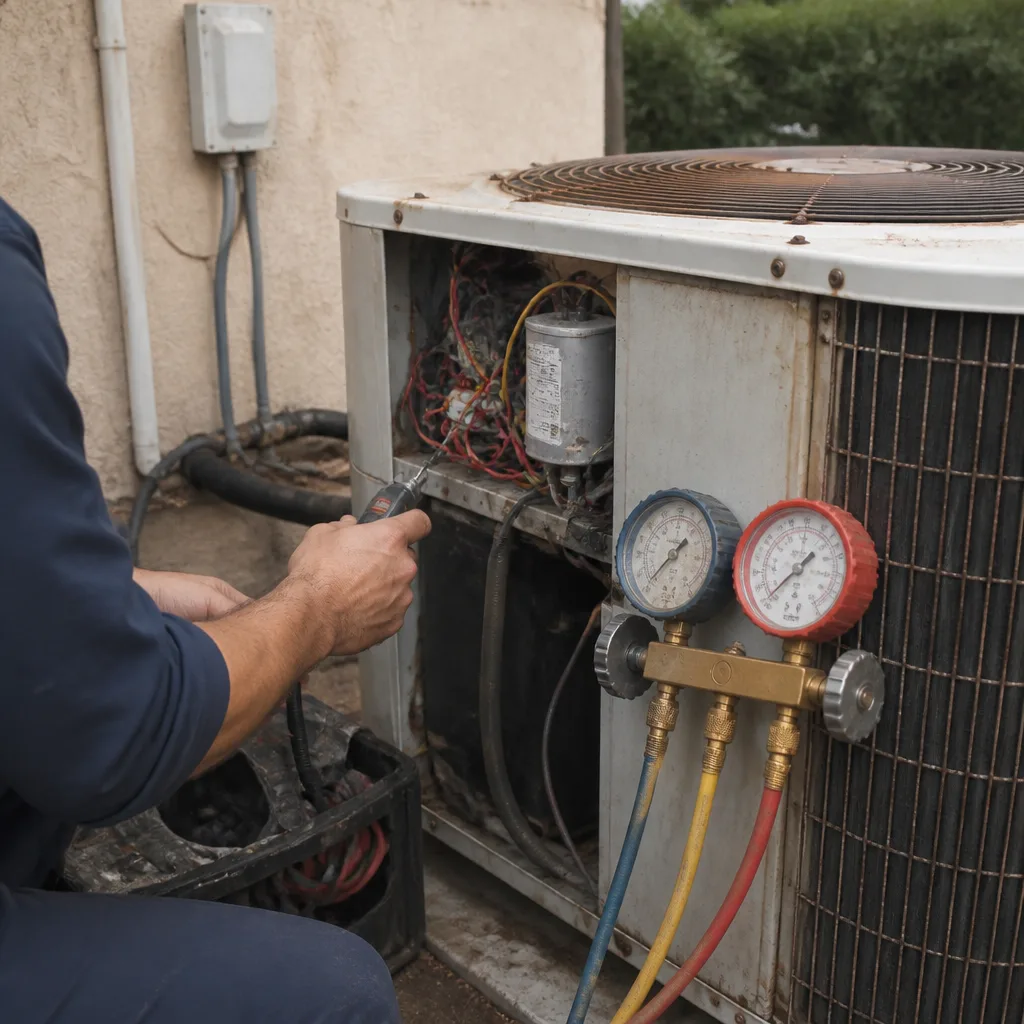 Before
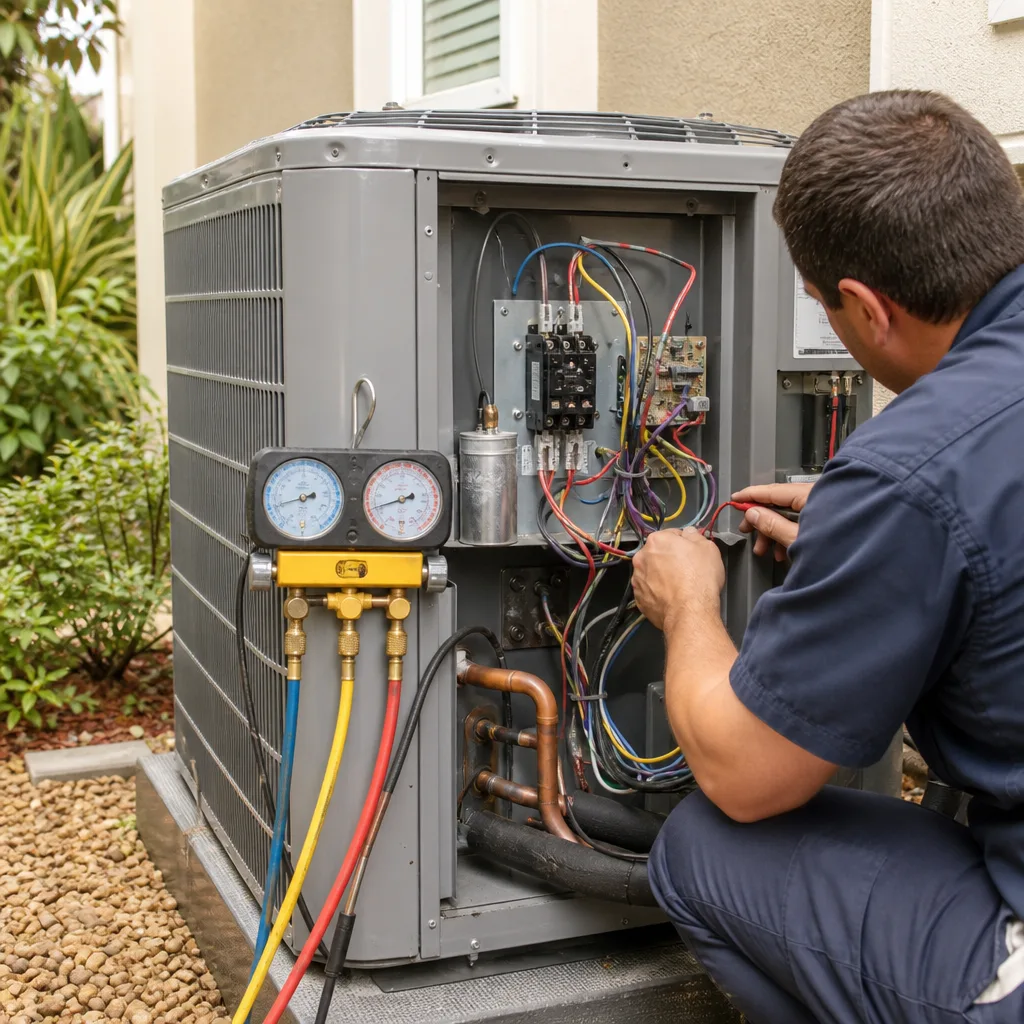 After
After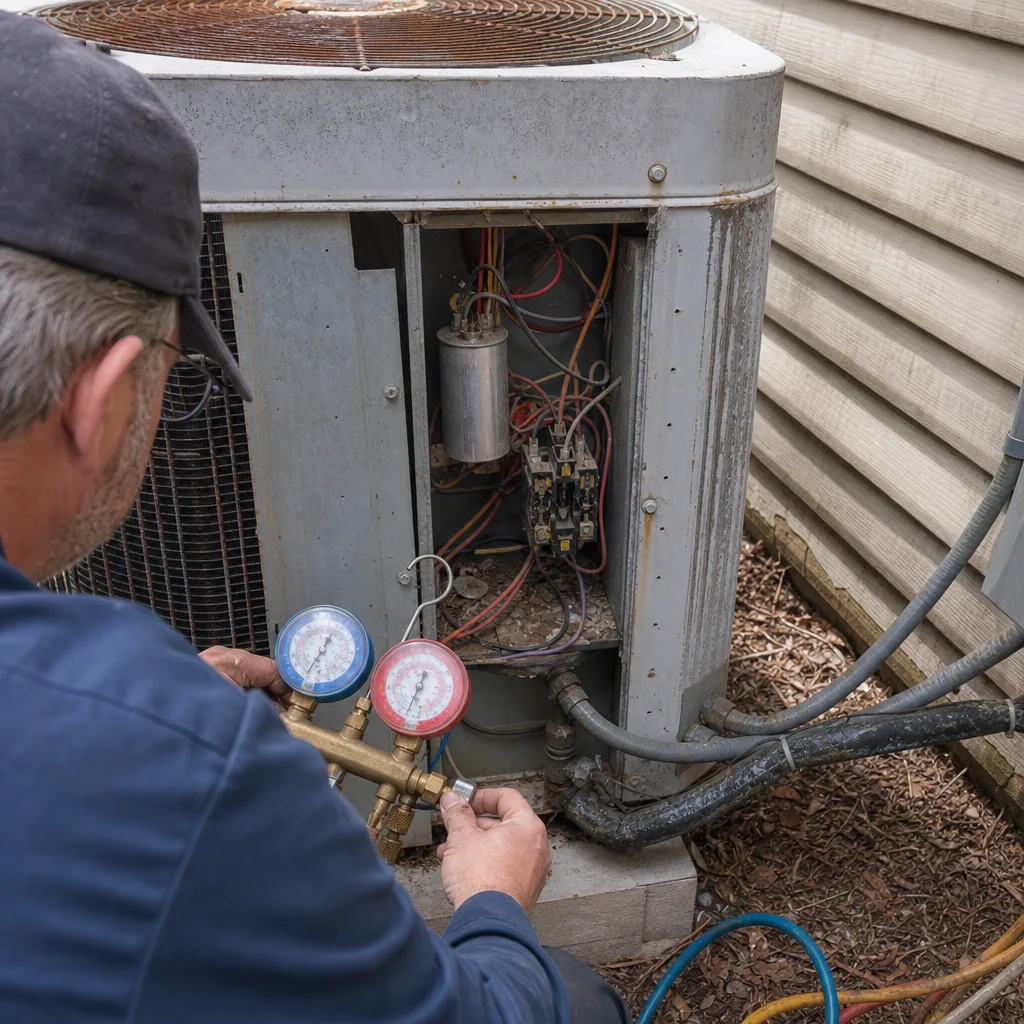 Before
 After
After Before
 After
After