
Last updated October 16, 2026
 AC repair
 Heat pumps
 Ductless mini splits
 Trane
Trane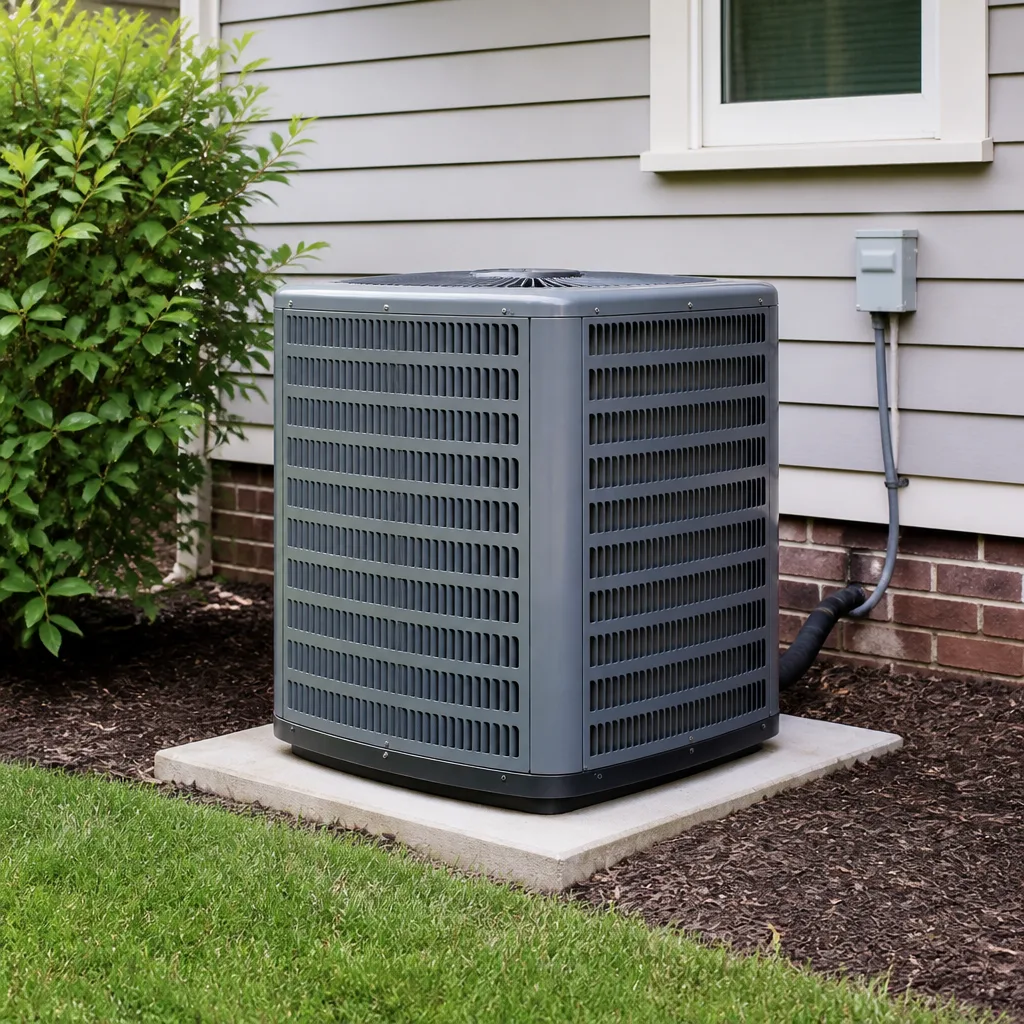 Goodman
Seasonal tune-up and full diagnostic on your Carrier, Trane, or Goodman system - readings shown to you before any repair is proposed
Diagnosis first, numbers second - you approve the repair price before a single part goes in.
Get your free estimateHVAC Permits, Codes & Inspections in FL: What You Need to Know
Florida is one of the few states where a homeowner can lose a home sale over an air conditioner that was installed without a permit six years ago. The state’s building code treats HVAC systems as structural, regulated equipment, not as appliances you can swap out on a Saturday. In West Palm Beach, where salt air corrodes condenser coils faster than inland and hurricane wind-load requirements add another layer of engineering, the gap between what most homeowners assume is allowed and what Palm Beach County actually enforces has cost sellers thousands of dollars and weeks of delay. This guide explains precisely what triggers a permit, what the inspector checks, what the Florida Building Code Mechanical sections actually say, and how unpermitted work follows you long after the contractor’s truck leaves the driveway. For related reading, see our AC Repair Maintenance Checklist for West Palm Beach Homeowners.
Quick Answer
In Florida, any HVAC change that involves replacing the condenser, air handler, or ductwork layout requires a mechanical permit pulled by a state-licensed contractor, and the work must pass a county inspection before the system is operated. Palm Beach County enforces stricter duct leakage testing than the state baseline, and unpermitted HVAC work can void manufacturer warranties, stall a home sale, and give an insurer grounds to deny a fire or water-damage claim. A homeowner can pull an owner-builder permit, but for HVAC work this almost always costs more and protects less than hiring a licensed contractor who runs permits as part of the job.
Styles & brands we work with
Table of Contents
- The Florida Building Code: What It Actually Says About HVAC
- When a Permit Is Required (And When It Is Not)
- Palm Beach County Amendments: The Second Layer
- What the Florida HVAC Inspection Actually Checks
- How Unpermitted HVAC Work Follows You
- The Owner-Builder Permit: Why It Usually Backfires
- What Permits and Inspections Cost in Palm Beach County
- Common Mistakes to Avoid
The Florida Building Code: What It Actually Says About HVAC
The Florida Building Code (FBC) is updated every three years, and the Mechanical volume (FBC Mechanical) is the section that governs heating, ventilation, and air conditioning work. The FBC is built on the International Mechanical Code with Florida-specific amendments that address the state’s humidity, hurricane wind loads, and high ambient temperatures. For homeowners, the critical distinction in the code is between repair and replacement.
Chapter 1 of FBC Mechanical covers administration and enforcement. Section 101.4 makes clear that mechanical work, including HVAC, requires a permit unless the specific work is listed as exempt. Replacement of a component like a capacitor, contactor, or circuit board is generally considered repair and may not require a permit, depending on the municipality. But replacing the outdoor condensing unit, the indoor air handler, or the evaporator coil generally does. The logic is simple: these replacements change the system’s operational characteristics, electrical load, refrigerant charge, and airflow, and the county wants a record that the work met code at the time it was done.
One of the most misunderstood code sections is FBC Mechanical 304, which addresses installation requirements. It states that equipment must be installed in accordance with the manufacturer’s installation instructions and the listing, and that access for service and maintenance must be maintained. In practice, an inspector will check that a new condenser has the required clearance from walls and obstacles, that the pad is level and elevated to meet flood zone requirements, and that the electrical disconnect is within sight and reach. A contractor who skips the permit also tends to skip these details, and that is exactly where problems surface later.
West Palm Beach sits in a high-velocity hurricane zone, and that changes the structural anchoring requirements for rooftop and ground-mounted equipment. The code requires specific tie-down methods for rooftop units and elevated pads for ground units in flood-prone areas. A system that meets code in Orlando may not meet code in Palm Beach County, which is one reason a local contractor who knows the amendments is worth more than a generic license. Our Seasonal HVAC Care for West Palm Beach: Year-Round Homeowner’s Guide covers additional local requirements.
When a Permit Is Required (And When It Is Not)
The easiest way to think about it: if the work changes the system, it needs a permit. If the work restores the system to its original operating condition, it typically does not. Here is the breakdown as it applies in practice across Palm Beach County.
Work that typically requires a mechanical permit:
- Replacing the outdoor condenser or heat pump unit
- Replacing the indoor air handler or furnace
- Replacing or relocating ductwork, including adding new supply or return runs
- Installing a new system in a home that never had central air
- Converting from one fuel source to another, such as electric to gas
- Installing a mini-split system with new refrigerant lines and electrical circuits
Work that typically does not require a permit:
- Replacing a capacitor, contactor, thermostat, or control board
- Replacing a condenser fan motor or blower motor
- Cleaning coils, flushing drain lines, or performing standard maintenance
- Recharging refrigerant after a leak repair has been completed and documented
- Replacing a filter, belt, or access panel
The gray area is the line between “repair” and “replacement.” A failed compressor can be replaced as a component repair in some municipalities, but a change from R-22 to R-410A refrigerant, which is required for most older systems being modernized, often triggers a permit because the entire system’s compatibility and coil must be addressed. If a contractor tells you a permit is not needed for a full condenser replacement, that should raise a flag before the work starts, not after.
In West Palm Beach, we have seen this issue play out repeatedly. A homeowner replaces a 20-year-old R-22 system with a new R-410A system, the contractor says the permit is just paperwork and not worth the delay, and three years later the homeowner tries to sell. The buyer’s four-point inspection flags the system as unpermitted because the property record still shows the original 2003 unit. The sale pauses. The permit that would have cost a few hundred dollars and two days now costs more, plus inspection fees, plus whatever corrections the inspector requires now that the work is years old. Learn how to spot these issues early in our HVAC Warning Signs: A West Palm Beach Homeowner’s Reference Guide.
Palm Beach County Amendments: The Second Layer
Florida is a home-rule state for building code enforcement. The state sets the baseline, and local jurisdictions can adopt amendments that are stricter. Palm Beach County has exercised that right, and the two areas where it matters most for HVAC work are duct testing and energy compliance documentation.
The state baseline for duct leakage, as referenced in the Florida Energy Conservation Code, allows measured duct leakage of up to 4 cubic feet per minute per 100 square feet of conditioned floor area when the air handler is installed outside the conditioned space. Palm Beach County enforces a stricter threshold in many unincorporated areas and in several municipalities: 3 cfm per 100 square feet, or even lower in some newer construction zones. This is called the “Total Duct Leakage” test, and it is measured by a duct blaster, which pressurizes the duct system and measures exactly how much air escapes through seams, joints, and connections.
What this means in practice: an HVAC contractor who replaces an air handler in a 2,000 square foot West Palm Beach home must test the existing ductwork and demonstrate leakage below the county’s threshold. If the ducts are 40 years old, they will almost certainly fail. The choices then become sealing the ducts, replacing some runs, or replacing the duct system entirely. A contractor who skips this test is either not following Palm Beach County code or plans to fudge the paperwork, and neither outcome protects the homeowner.
Palm Beach County also requires a Manual J load calculation for new installations and for replacements where the system size changes by more than half a ton. Manual J is the industry-standard method for calculating how much heating and cooling a home needs based on square footage, insulation, window orientation, air leakage, and local climate data. A contractor who quotes “a 4-ton for a 2,000 square foot house” without running Manual J is guessing, and guessing often means oversizing, which leads to short cycling, higher humidity in the home, and shorter equipment life.
We see this in older West Palm Beach neighborhoods like Flamingo Park, where homes built in the 1950s have been updated piecemeal over decades. The original ducts often run through uninsulated attics and have been patched with tape over tape. A proper Manual J on one of these homes often shows a smaller system is needed than what is currently installed, but only after the duct leakage is corrected. The permit and inspection process is what forces those corrections into the open.
What the Florida HVAC Inspection Actually Checks
After the permit is pulled and the work is done, a county inspector arrives to verify the installation. The inspection is typically scheduled by the contractor, and the homeowner does not need to be present, though it is wise to ask for the inspection report afterward. Here is the step-by-step of what a Palm Beach County mechanical inspector checks on a typical condenser and air handler replacement.
- Permit and plans posted: The inspector verifies that the permit card is visible at the job site and that the work matches the scope described in the permit application. Work that exceeds the permit scope is an automatic fail.
- Equipment rating plate: The inspector records the model and serial number of the condenser and air handler and confirms they match the permit. This is how the county creates the permanent equipment record that will later appear in a four-point inspection.
- Electrical disconnect: The disconnect box must be within sight of the unit and accessible. The inspector checks wire gauge, breaker size, and that the disconnect is properly labeled.
- Condenser pad and anchoring: The pad must be level, elevated to meet flood zone requirements, and anchored if required by wind zone. In West Palm Beach, ground-mounted condensers in flood zones generally must sit at or above the base flood elevation.
- Refrigerant line installation: The inspector checks that suction and liquid lines are properly supported, insulated where required, and not kinked. Line sets run through walls must be sealed against air and water intrusion.
- Condensate drainage: The primary and secondary drain lines must be properly pitched, trapped, and terminated. The secondary drain must either drain to a visible location or be equipped with a float switch that shuts the system off before overflow.
- Duct leakage test results: For replacements where the air handler is involved, the contractor must provide the duct blaster test results showing leakage below the Palm Beach County threshold. No test results, no pass.
- Thermostat and controls: The inspector verifies that the thermostat is properly wired and that the system responds correctly to heating and cooling calls.
This inspection typically takes between 20 and 45 minutes. If the system fails, the inspector writes up the specific deficiencies, and the contractor must correct them and schedule a reinspection. A reinspection usually costs an additional fee. A contractor who does high-quality work in Palm Beach County passes first-time inspection the vast majority of the time, because they know exactly what the inspector will check and they build to that standard from the start.
How Unpermitted HVAC Work Follows You
The most expensive HVAC work is the work done without a permit, because the cost arrives later, often with interest and inconvenience attached. Unpermitted work shows up in three places: the property record, the insurance file, and the seller disclosure.
The Property Record
Every permitted HVAC installation in Palm Beach County is recorded in the property file with the equipment model, serial number, install date, and the contractor’s license number. When a buyer’s inspector runs a four-point inspection (standard for homes over 20 years old and often required by insurers), they pull this property record. If the record shows a 2005 unit but the physical unit on the pad is from 2019, the inspector flags it. The buyer’s agent then asks for the permit. No permit means the system is considered unpermitted, and the sale either pauses for retroactive permitting or the buyer demands a price reduction to cover the risk.
That is not a hypothetical. A homeowner in the Southland Park neighborhood of West Palm Beach allowed a contractor to skip the permit on a full system replacement. Three years later, during a sale, the buyer’s inspector caught the mismatch. The deal paused for 22 days while the seller hired a licensed contractor to pull a retroactive permit, which required opening walls to inspect duct connections that had been closed up years earlier. The total cost: $3,400 for the retro permit, the reinspection, and the drywall repair. The sale closed, but at a price lower than the original offer after the buyer’s lender added a repair escrow.
The Insurance File
Florida homeowners insurance carriers are aggressive about HVAC claims. If a compressor fire or a condensate overflow causes damage and the carrier discovers the system was replaced without a permit, the claim can be denied on the basis that the work was not inspected and therefore cannot be verified as code-compliant. This is not speculation. Florida case law generally supports insurers in denying claims where unpermitted work contributed to the loss. The homeowner’s argument of “I didn’t know” does not override the policy language.
Some carriers now require a four-point inspection before binding coverage on any home over 20 years old, and they ask specifically whether any HVAC work was done without permits. Answering yes means the carrier may decline to quote or may exclude HVAC-related claims. Answering no when the truth is yes is material misrepresentation on the application, which can void the policy entirely.
The Seller Disclosure
Florida law requires sellers to disclose known defects that materially affect the value of the property. Unpermitted work is a known defect once the seller is aware of it. A seller who knows the HVAC was replaced without a permit and does not disclose it can be sued after closing for nondisclosure. The buyer’s remedy includes the cost of retro permitting, any correction work, and potentially attorney fees. In a state where the average single-family home sale in Palm Beach County exceeds $500,000, that exposure is not trivial.
The bottom line on unpermitted work: the savings a contractor offers by skipping the permit, typically a few hundred dollars, transfers a five-figure risk to the homeowner. No reputable contractor in West Palm Beach should be offering this trade-off.
The Owner-Builder Permit: Why It Usually Backfires
Florida law allows a homeowner to pull an owner-builder permit for work on a home they own and occupy. This right exists to protect homeowners who genuinely want to do their own work. For HVAC, the owner-builder option is legal but almost always a trap, for three specific reasons.
First, the Florida Building Code requires that HVAC work be performed by a licensed mechanical or air conditioning contractor. The owner-builder exemption does not override the requirement that refrigeration and electrical connections be done by someone with the appropriate license. A homeowner can pull the permit, but they cannot legally perform the refrigerant handling or the electrical work unless they personally hold the required certifications, which virtually no homeowner does.
Second, when a homeowner pulls an owner-builder permit and then hires an unlicensed individual to do the actual work, the homeowner assumes full liability for any code violations, any injuries, and any property damage. The unlicensed worker has no bond, no insurance, and no license to discipline. If the worker drops a condenser on a foot, the homeowner’s insurance is the one on the hook.
Third, owner-builder permits create a disclosure obligation that follows the home. Florida law requires the homeowner who pulls an owner-builder permit to disclose that fact to a buyer within a year of the work. The disclosure operates as a red flag for buyers and their inspectors, who are trained to scrutinize owner-builder work more carefully. Many buyer’s lenders will not finance a home with recent owner-builder HVAC work without an additional mechanical inspection, which the buyer may demand the seller pay for.
There are legitimate uses of the owner-builder permit for HVAC, but they are narrow: a homeowner who is a licensed HVAC contractor working on their own home, or a homeowner doing highly limited work like installing a ductless mini-split under the direct supervision of a licensed contractor who signs off on the work. For a full system replacement in West Palm Beach, the owner-builder permit is a path to more liability, not less cost.
What Permits and Inspections Cost in Palm Beach County
Permit fees for HVAC work in Palm Beach County are based on the valuation of the work, which is the total cost of materials and labor. A typical residential condenser and air handler replacement in West Palm Beach, valued at $8,000 to $14,000, carries a mechanical permit fee in the range of $150 to $400 depending on the exact municipality. Unincorporated Palm Beach County, West Palm Beach, Lake Worth Beach, and Boca Raton all have slightly different fee schedules, but all fall within this general range.
The permit fee covers the initial inspection. If a reinspection is required because the system failed the first inspection, that fee is usually between $50 and $120. If the work changes scope after the permit is issued, a permit revision fee applies.
The duct leakage test is a separate line item, typically $150 to $350 depending on the size of the home and the number of duct runs. The Manual J load calculation ranges from $150 to $400. Some contractors bundle these into the quoted price for a replacement; others list them separately. At Brandt HVAC Co West Palm Beach, every quoted price for work that requires a permit includes the permit fee, the inspection coordination, and the duct test, because a price that hides these costs is not a real price.
Here is the typical line-item breakdown for a full system replacement permit in West Palm Beach:
- Mechanical permit fee: $150 – $400
- Duct leakage test: $150 – $350
- Manual J load calculation: $150 – $400
- Inspection coordination: included by most licensed contractors
- Reinspection (if required): $50 – $120
These costs should be disclosed before work begins, in writing, with no surprises. If a contractor’s quote is dramatically lower than another, the reason is often that the permit and testing costs are omitted. That is not a bargain; it is a deferred expense with a much larger bill attached to it later.
Common Mistakes to Avoid
- Trusting a contractor who says a full system replacement does not need a permit. In Florida, it does, and in Palm Beach County the duct test makes it impossible to hide. The contractor who says otherwise is either unlicensed or is asking you to absorb a risk you should not carry.
- Paying in full before the inspection is scheduled. Some contractors take payment and then stall on the permit or the inspection. Withhold final payment until the county has signed off on the work and you have a copy of the passed inspection report.
- Assuming the permit is the contractor’s problem, not yours. The permit is issued to the contractor, but the property record is yours. If the work is unpermitted, it is your home sale, your insurance claim, and your disclosure form on the line years later.
- Skipping the Manual J and accepting a “same size as the old one” quote. A system that was oversized when installed in 1998 is still oversized today. The right size is determined by calculation, not by what the old unit’s label says.
- Choosing a contractor based on price alone. The three bids that come in at the same number include permits and testing. The fourth bid, 20% lower, does not. The difference is the cost of the corner being cut, and it is being cut on your side of the table.
- Not asking for the model and serial numbers before work starts. Knowing exactly which unit is being installed, and confirming it matches the permit, prevents bait-and-switch equipment changes at the job site.
- Ignoring the condensate drain design. In West Palm Beach’s humidity, a poorly designed drain is not a small issue. A float switch is required by code and should be verified during the inspection walk-through.
See the difference
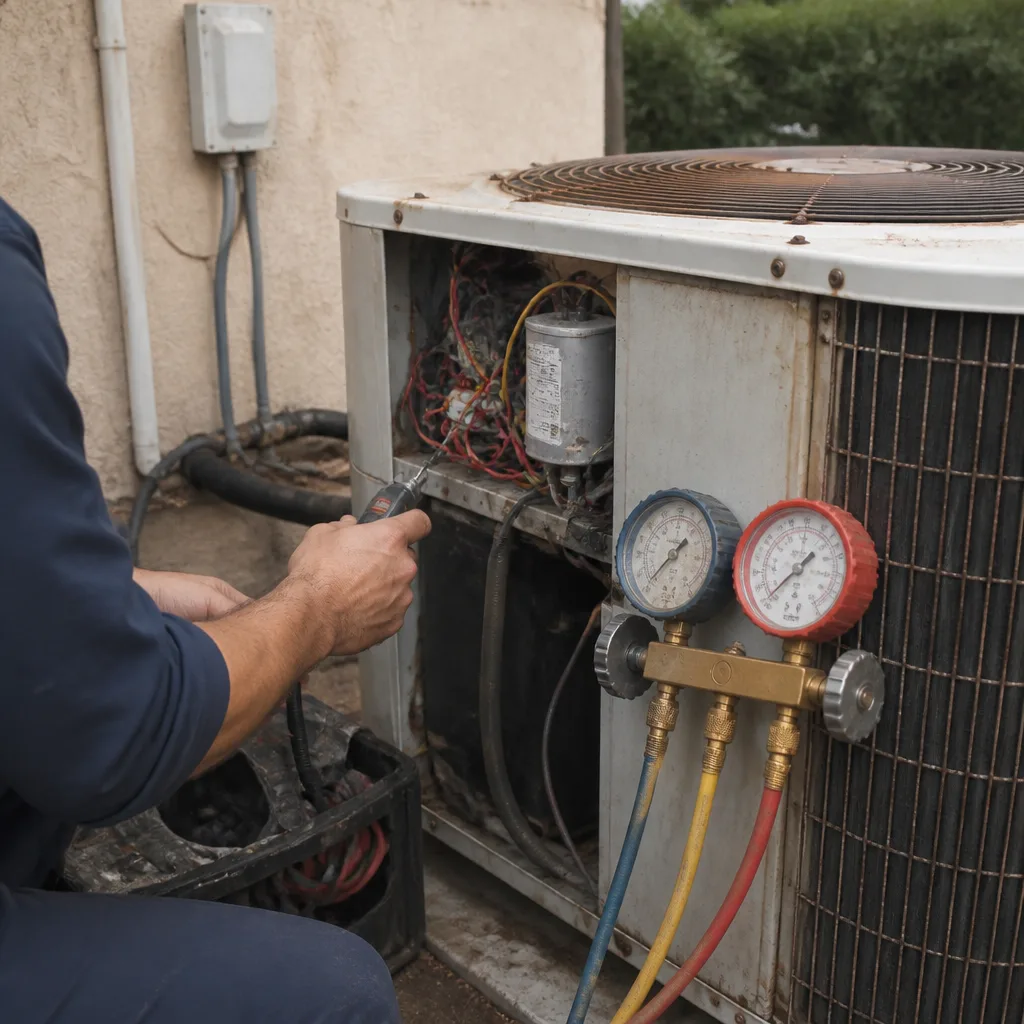 Before
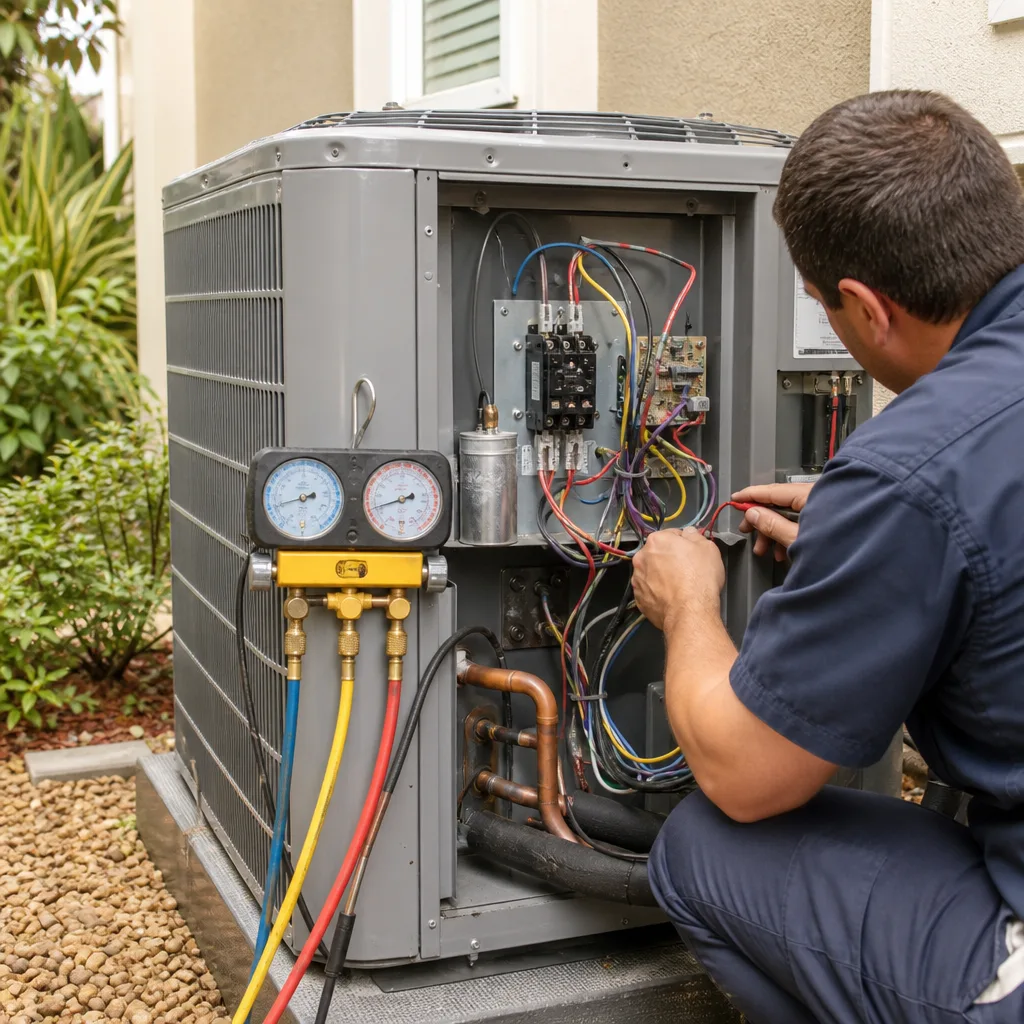 After
After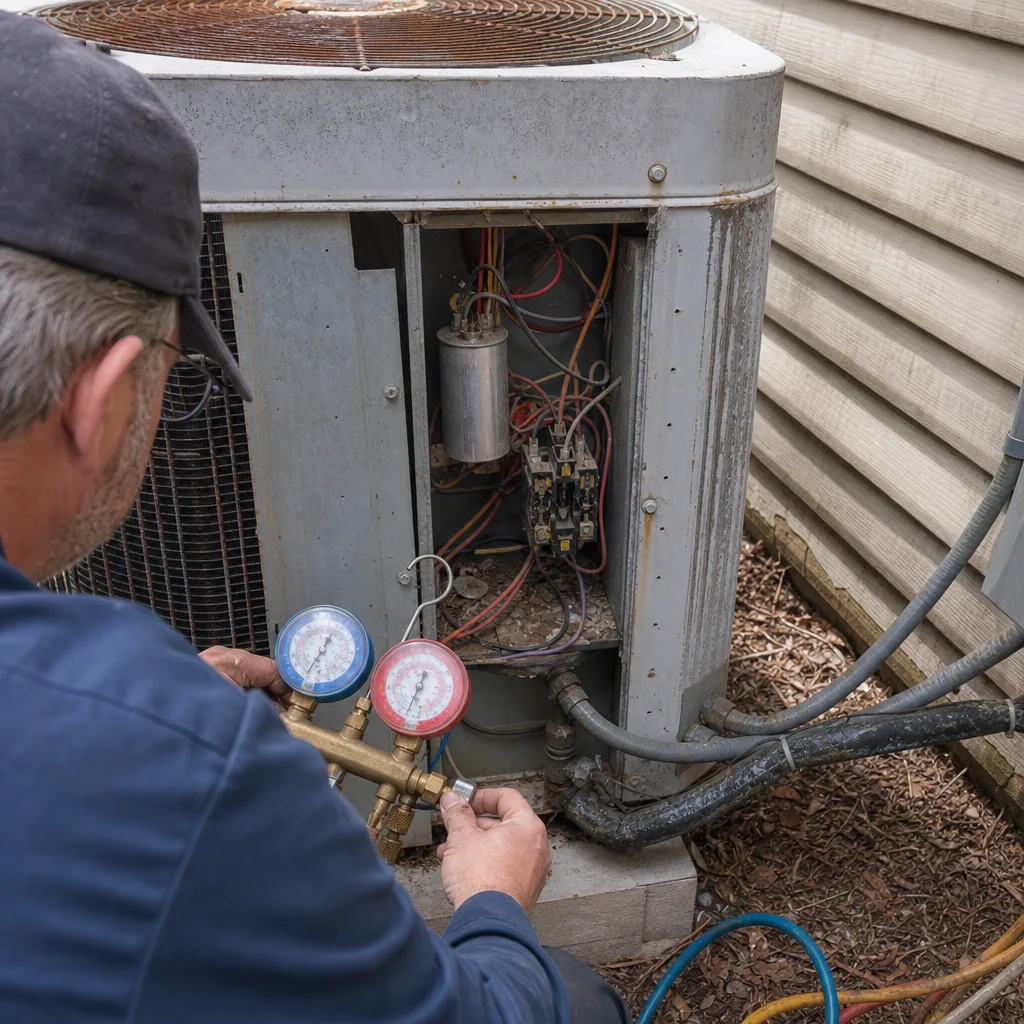 Before
 After
After Before
 After
AfterWhen to Call a Professional
HVAC permits, code requirements, and inspections are not a DIY project. The moment you are replacing equipment, running new ductwork, or questioning whether the work already done on your home was permitted, call a licensed contractor who handles permits as a standard part of the job. Specifically, call if you are buying a home where the four-point inspection flagged the HVAC, if you are selling a home and cannot produce the permit for a system replacement, if your insurance carrier is asking about unpermitted work, or if a previous contractor’s work failed an inspection and you need it corrected to close a sale or a claim. AC repair in West Palm Beach that is done right includes the paperwork, not just the parts. Furnace repair in West Palm Beach follows the same permitting rules when the work involves replacement or relocation. Brandt HVAC Co West Palm Beach offers free estimates in West Palm Beach that include the full permit and inspection scope in writing. Call (728) 220-0996.
Frequently Asked Questions
Yes, replacing the outdoor condenser or indoor air handler in Florida requires a mechanical permit pulled by a licensed contractor, and the work must pass a county inspection. Simple component repairs like a capacitor or thermostat replacement generally do not need a permit, but any replacement that changes the system’s operational characteristics does.
Unpermitted HVAC work shows up as a mismatch on the property record during a four-point inspection, which can stall a home sale, trigger a retroactive permit and reinspection, and give an insurer grounds to deny a claim if the system causes fire or water damage. The retroactive permit process typically costs more than the original permit would have and requires opening walls to inspect connections that should have been inspected when the work was new.
A mechanical permit for a residential HVAC replacement in West Palm Beach typically costs between $150 and $400 depending on the value of the work, plus $150 to $350 for the required duct leakage test. These costs should be included in a contractor’s written quote, not added as a surprise after the work is scheduled.
A duct leakage test, or duct blaster test, pressurizes the duct system and measures how much air escapes through seams and joints. Palm Beach County enforces a stricter threshold than the Florida state baseline, typically 3 cfm per 100 square feet of conditioned floor area or lower, and the test is required when an air handler is replaced.
Florida law allows an owner-builder permit, but for HVAC work it almost always backfires because the actual refrigeration and electrical work must still be performed by a licensed contractor. The homeowner who pulls the permit assumes liability for code violations, injuries, and property damage, and the owner-builder status must be disclosed to a future buyer within a year.
A typical residential HVAC permit in West Palm Beach is issued within one to five business days, and the inspection is usually scheduled within one to three business days after the work is complete and the contractor requests it. The inspection itself takes 20 to 45 minutes. Most full replacements with permits are completed within one to two weeks from permit application to passed inspection.
The Bottom Line
Florida HVAC permits are not optional paperwork. They are the record that protects your warranty, your insurance coverage, your home sale, and your liability exposure for as long as you own the property. Palm Beach County makes the process stricter than most of the state, which means more protection for the homeowner who follows the process and more consequence for the one who skips it. Before you sign any contract, confirm that the permit, the inspection schedule, the duct test, and the Manual J calculation are all included in the written price. If they are not, the price is not real. At AC maintenance in West Palm Beach and every HVAC service we provide, the paperwork is part of the work, every time. Call (728) 220-0996 for a free estimate that includes the full permit and inspection scope in writing.
Written by Devin Marlowe, Owner at Brandt HVAC Co West Palm Beach, serving West Palm Beach since 2003. Browse more guides & resources for local homeowners.