
 AC repair
 Heat pumps
 Ductless mini splits
 Trane
Trane Goodman
Seasonal tune-up and full diagnostic on your Carrier, Trane, or Goodman system - readings shown to you before any repair is proposed
Diagnosis first, numbers second - you approve the repair price before a single part goes in.
Get your free estimateCarrier Capacitor Replacement: The West Palm Beach Owner’s Guide
We replace Carrier capacitors in West Palm Beach for $150 – $300 installed, parts and labor included, and our trucks carry a range of Carrier-compatible capacitors so most jobs are done the same day. When a Capacitor fails, you’ll usually notice it before the AC quits entirely: the outside unit hums but the fan won’t spin, or it tries to start and clicks back off. That hum-and-nothing is the capacitor telling you it gave up, and in West Palm Beach it’s almost always on the hottest stretch of the year.
Here’s the thing most homeowners find out the hard way: a capacitor is a wear item. It doesn’t last the life of the system. Florida heat and humidity age them faster than almost any climate in the country, and when one fails, continuing to run the system can damage the compressor itself. If your Carrier is humming and not starting, shut it off at the thermostat and breaker and call us. The part is cheap. The compressor it protects is not.
Devin Marlowe, our owner, puts it this way: “Tell me what it’s doing, and I’ll tell you what it needs – no guesswork, no runaround.” That’s the standard we run every capacitor call by.
Which Carrier Models This Applies To
Carrier uses round and oval run capacitors across nearly every residential condenser and heat pump line: the Comfort series, Performance series, and Infinity series all use the same basic capacitor technology, though the specific microfarad (µF) rating varies by model and tonnage. You’ll find capacitors in Carrier units from the 1.5-ton base models up through 5-ton Infinity systems, and they range most commonly from 35/5 µF dual-run capacitors on smaller units to 80/10 µF on larger compressors.
The compatibility gotcha most people miss: Carrier uses dual-run capacitors in most residential outdoor units, meaning one can handles both the compressor and the condenser fan motor. If you or a previous tech installed a single-run capacitor or the wrong µF rating, the fan may spin while the compressor struggles, or the compressor may overheat and trip the breaker. The µF rating is printed right on the side of the capacitor, and it has to match what the unit’s data plate calls for. Too far off in either direction and things fail early.
The OEM versus aftermarket question: Carrier-branded capacitors are fine parts, but the major aftermarket brands we stock (AmRad and Titan HD are two we trust) are built to the same or better spec and don’t carry the Carrier logo markup. We’re an independent service company, not affiliated with Carrier, so we stock what lasts in South Florida heat, not what the manufacturer’s label costs. The difference is usually $15 to $40 for the part, with performance that’s every bit as good.
Styles & brands we work with
Signs Your Carrier Capacitor Replacement Is Failing
- The outside unit hums but the fan isn’t spinning. The capacitor has lost enough charge that it can’t push the fan motor to start. The hum is the motor trying and failing. Shut the system off and call us before the motor overheats.
- The AC starts, runs for a few minutes, then shuts off. In West Palm Beach heat, a weak capacitor causes the compressor to pull more current than it should, which trips the thermal overload. It cycles on for a bit, overheats, and cuts out, then tries again. Each cycle shortens the compressor’s life.
- The fan spins slowly or start-stops in a jerky way. The capacitor’s job is to give the motor a kick to get moving and keep the voltage steady while it runs. A failing one delivers inconsistent voltage, which shows up as a lazy or stuttering fan.
- Your energy bill jumped without a change in usage. A weak capacitor makes the compressor and fan work harder to do the same cooling, and hard-working motors pull more power. Not the first thing people check, but it shows up on the bill.
- You can see the capacitor bulging or leaking from the top. Capacitors have a vent on top that’s designed to rupture when the part overheats. A bulged or leaking top is a dead giveaway, and it means the capacitor is done. Don’t touch it. Call us.
See the difference
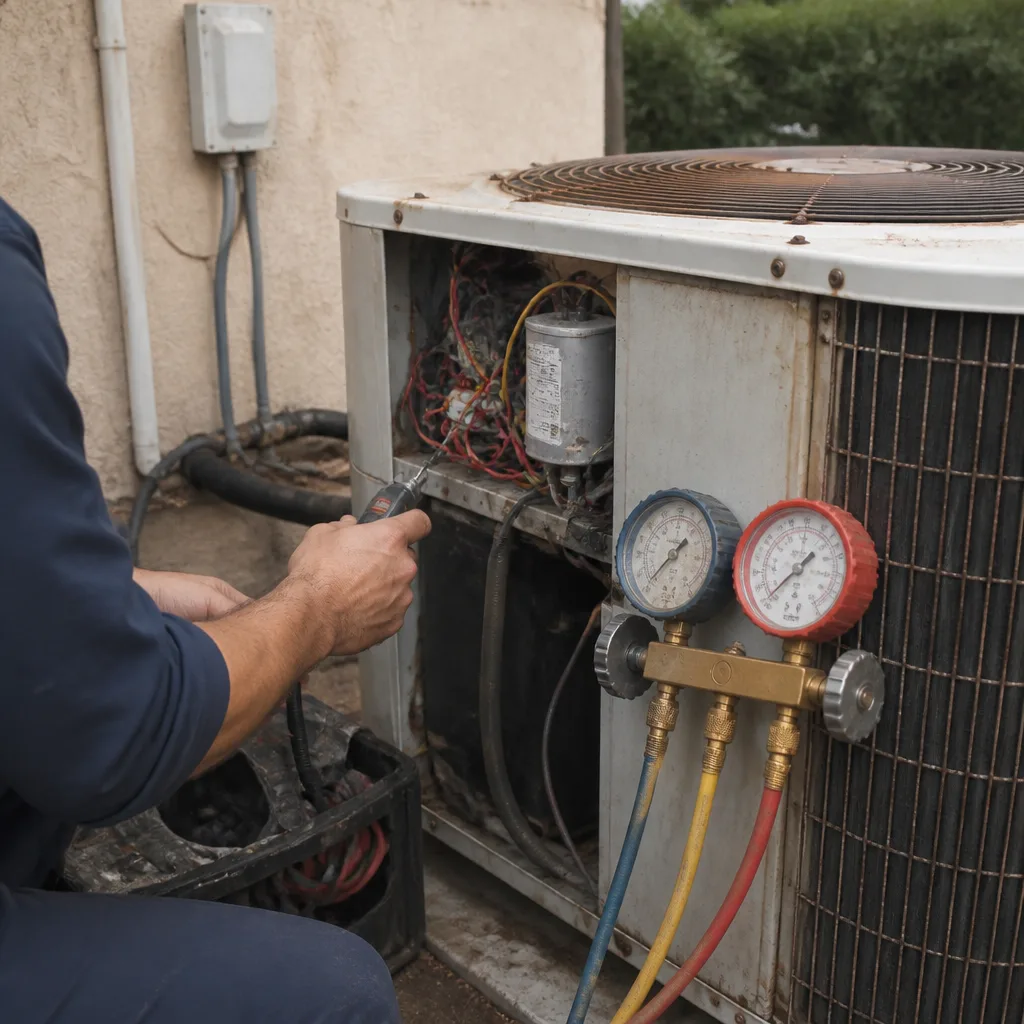 Before
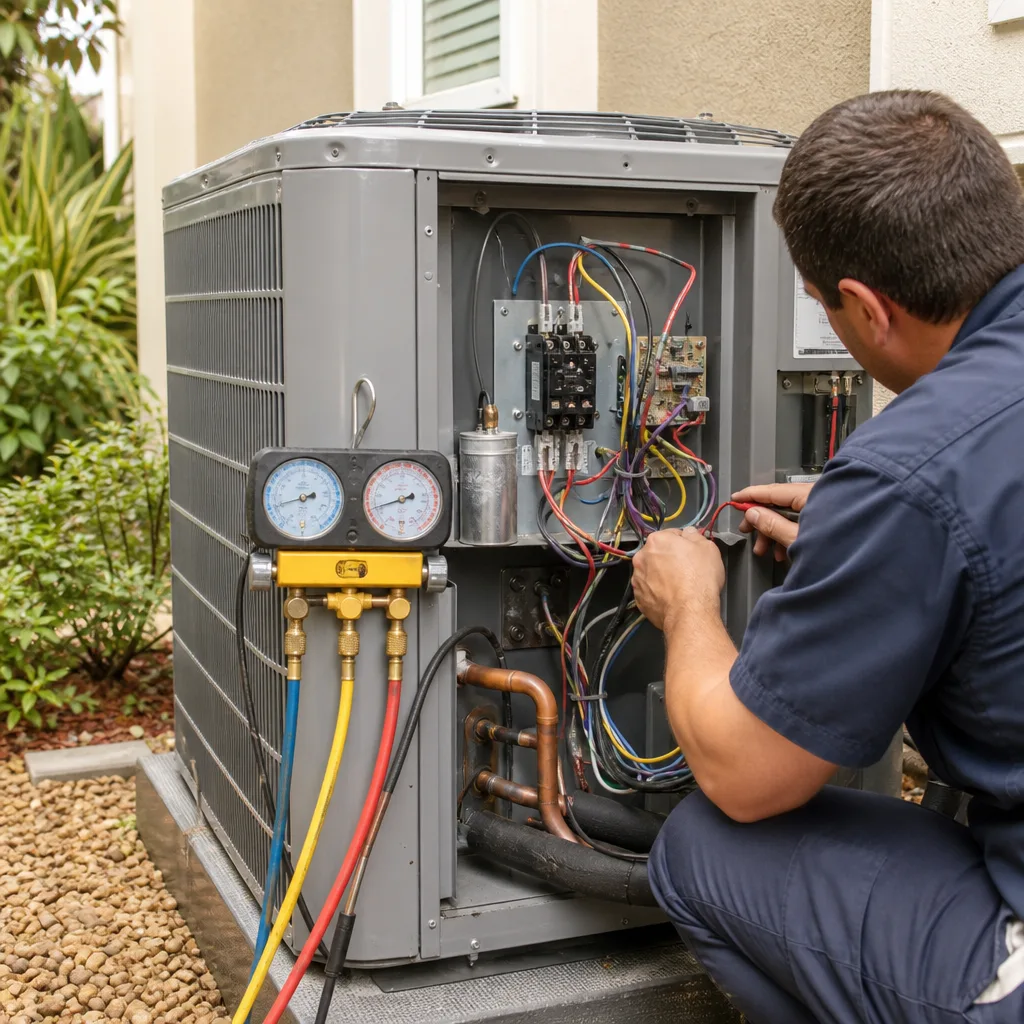 After
After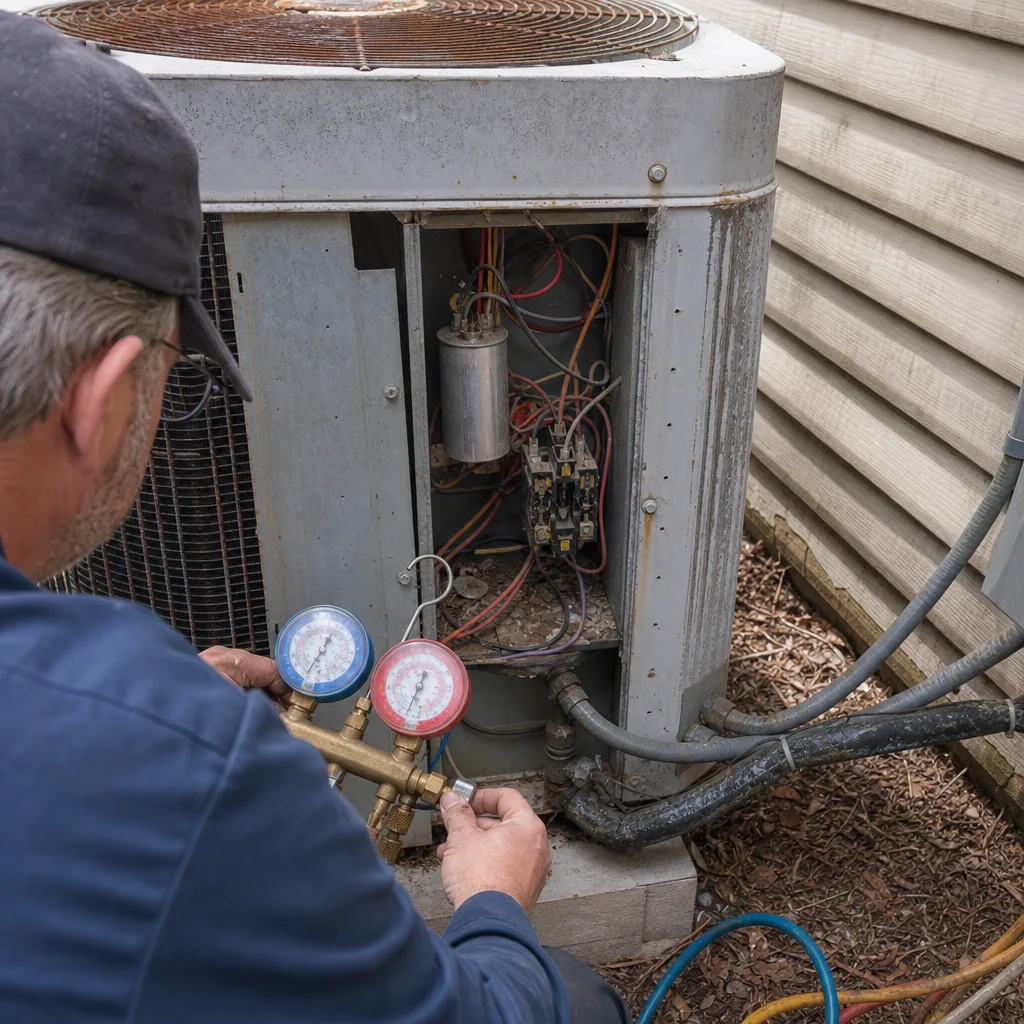 Before
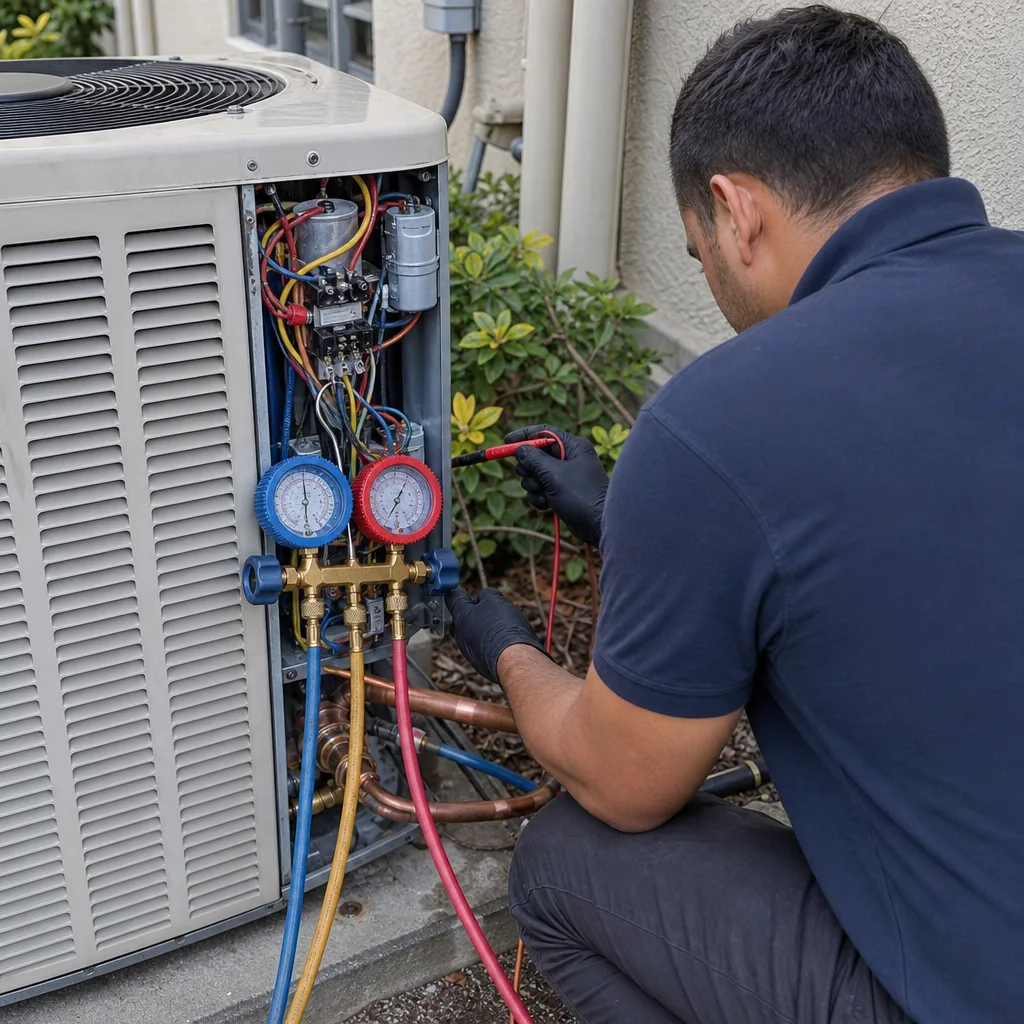 After
After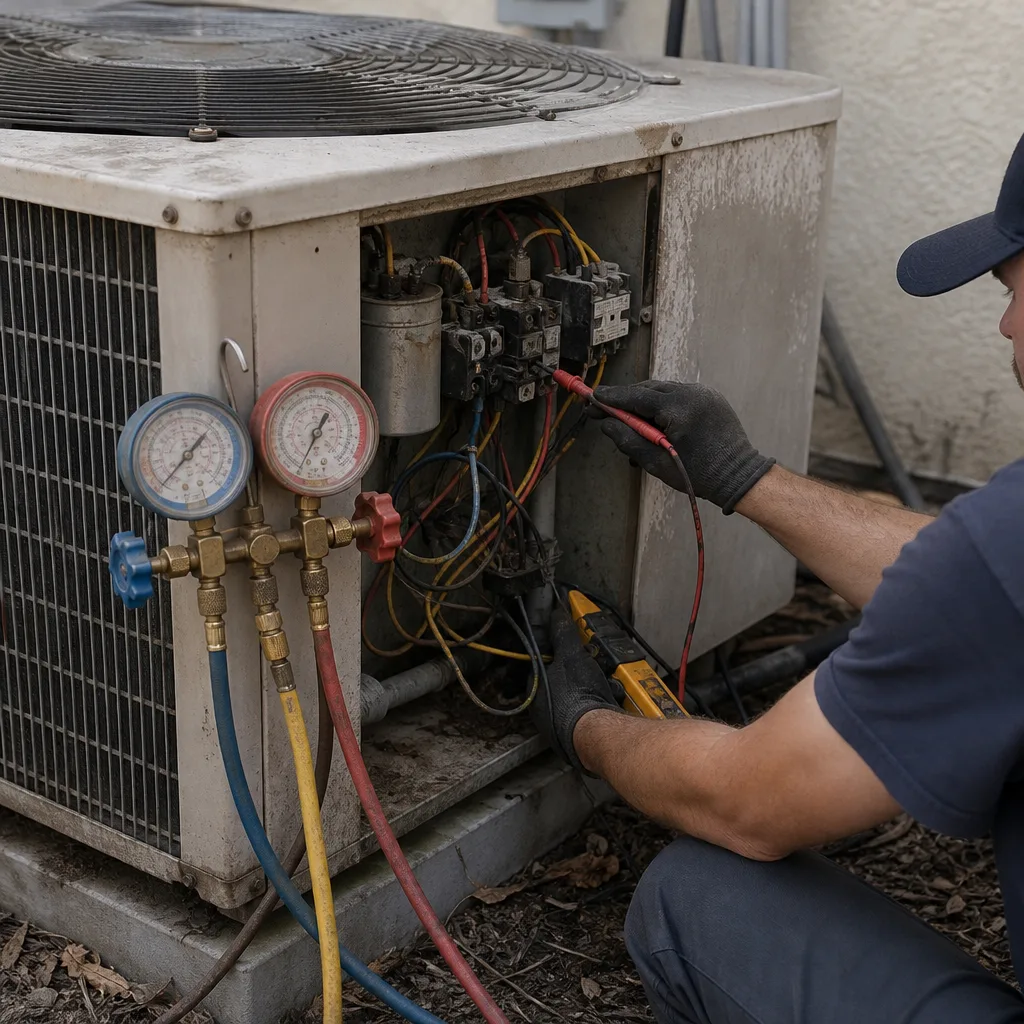 Before
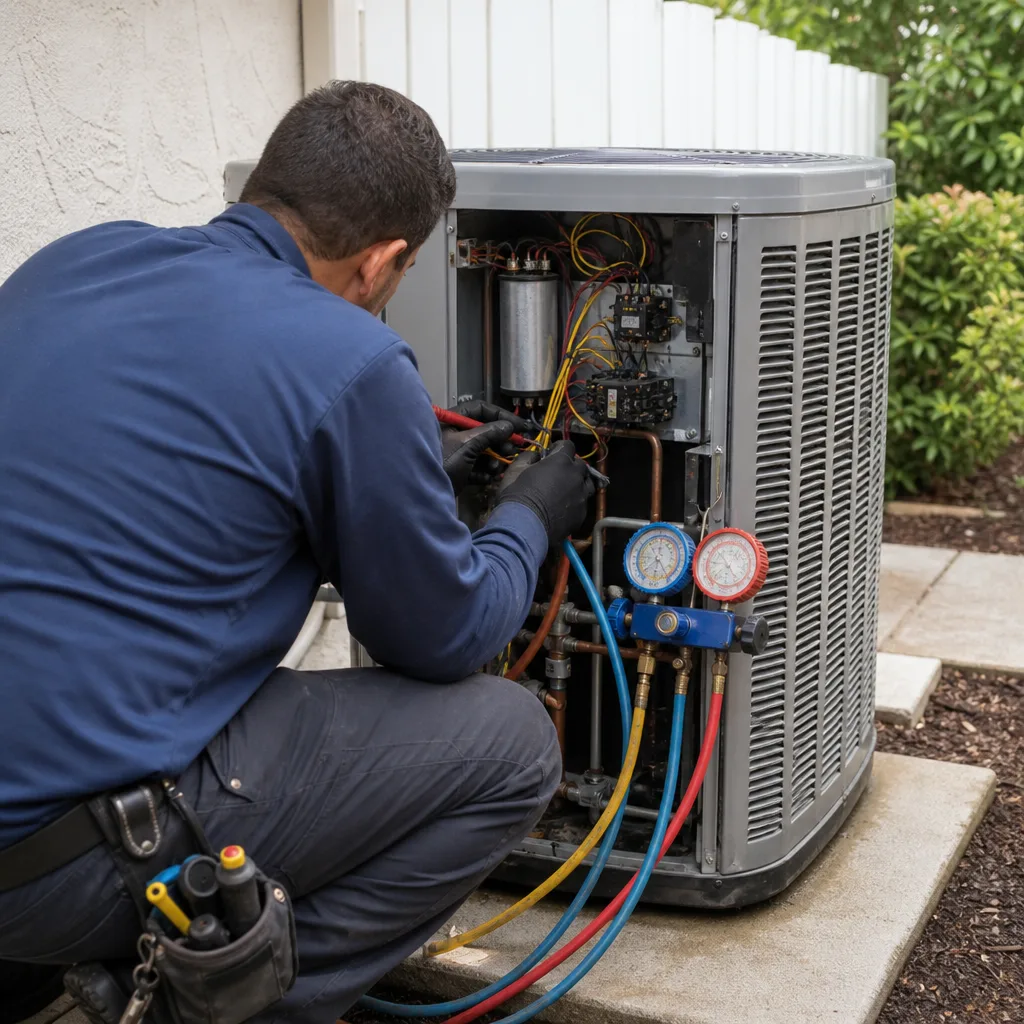 After
AfterReplacement Cost & What’s Included
In West Palm Beach, a Carrier capacitor replacement runs $150 – $300 installed. That’s the real range we quote, with the part itself usually running $25 – $75 depending on the µF rating and whether we’re pairing with OEM Carrier or a quality aftermarket equivalent. The rest is labor and the truck roll. No hidden diagnostic fee, no surprise upcharge when the job is harder than expected.
Here’s what that price includes, every single time:
- The capacitor matched to your specific Carrier model’s µF and voltage rating
- Installation and a full test cycle on the fan and compressor
- A check of the contactor and wiring while we’re in there, since capacitor failures often stress adjacent parts
- A written price before we touch anything, so you know the number before work starts
- A written guarantee on the repair
If the replacement capacitor fails within our guarantee period, we come back and replace it at no charge under the 365-Day Done Right Promise. No argument, no fine print, no second truck fee.
DIY or Call Us?
This is not a DIY part. Capacitors store electricity even when the unit is off and the breaker is cut. A charged capacitor can deliver a shock severe enough to stop your heart, and it doesn’t need the power on to do it. We’re not being dramatic. Every HVAC tech you know has a story about someone who got bit by a capacitor that should have been discharged. Do not open the condenser cabinet, do not touch the capacitor, and do not try to test it with a multimeter if you’re not trained to work with stored electrical charge.
What you can safely do: look through the condenser grille to see if the capacitor is bulging or leaking, check that the breaker hasn’t tripped, and confirm the thermostat is calling for cooling. Then call us at (728) 220-0996. We’ll have a technician out to West Palm Beach neighborhoods like Northwood Hills, Flamingo Park, or anywhere else in the area, with the part on the truck and a name and photo texted to you before arrival, so you know who’s coming to your door.
FAQs
A capacitor in West Palm Beach typically lasts 3 to 7 years. The heat, humidity, and salt air here shorten a capacitor’s life compared to the 5 to 10 years you’d see in a cooler climate. If your system is over 7 years old and on its original capacitor, you’re on borrowed time. Call (728) 220-0996 and we’ll test it during a tune-up or repair visit.
No. Capacitors cannot be repaired. The internal dielectric material breaks down, and once that happens the part is done. Replacement is the only option, and it’s the single least expensive repair on a Carrier system. Don’t be talked into a new system over a $25 part.
Most capacitor replacements take 30 to 45 minutes from the time the tech opens the condenser panel to the time the system is running and tested. The bulk of that time is discharging the old capacitor safely, confirming the correct replacement rating, and running the system through a full start-up cycle. If your schedule is tight, we’ll give you a window when you book.
Yes. Our trucks carry the common Carrier-compatible capacitor ratings plus the wiring and contactors that often get replaced alongside them. In West Palm Beach, where a failed capacitor in July means a 95-degree house by 3 p.m., we don’t make people wait on a parts run. For the rarer ratings on larger Infinity systems, we may need a short trip to our supplier, and we’ll tell you that before we schedule the visit.
Our trucks carry capacitors for Trane, Lennox, and most other major residential HVAC brands in addition to Carrier. The part technology is similar across brands; the difference is matching the exact µF rating and voltage for your specific unit.
Written by Devin Marlowe, Owner, Brandt HVAC Co – West Palm Beach at Brandt HVAC Co West Palm Beach, serving West Palm Beach and nearby areas.