
Last updated October 16, 2026
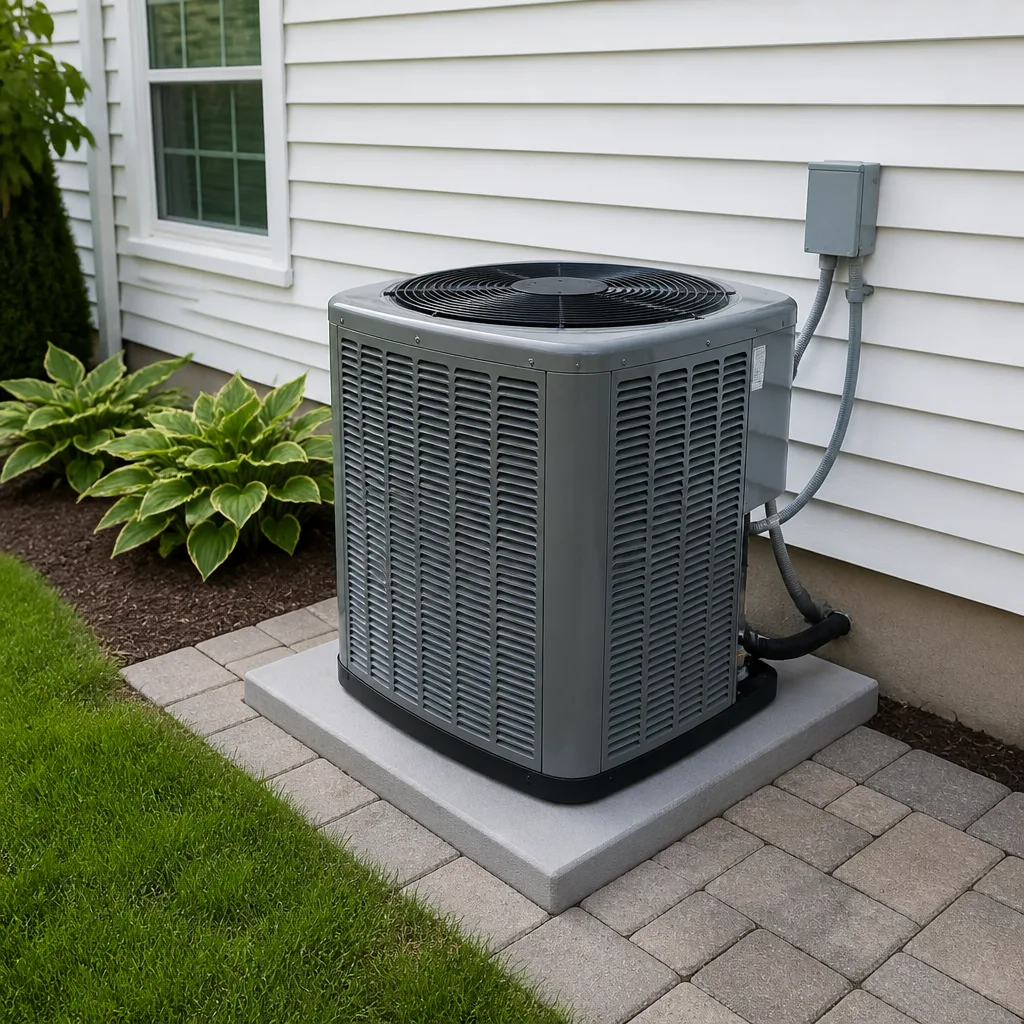 AC repair
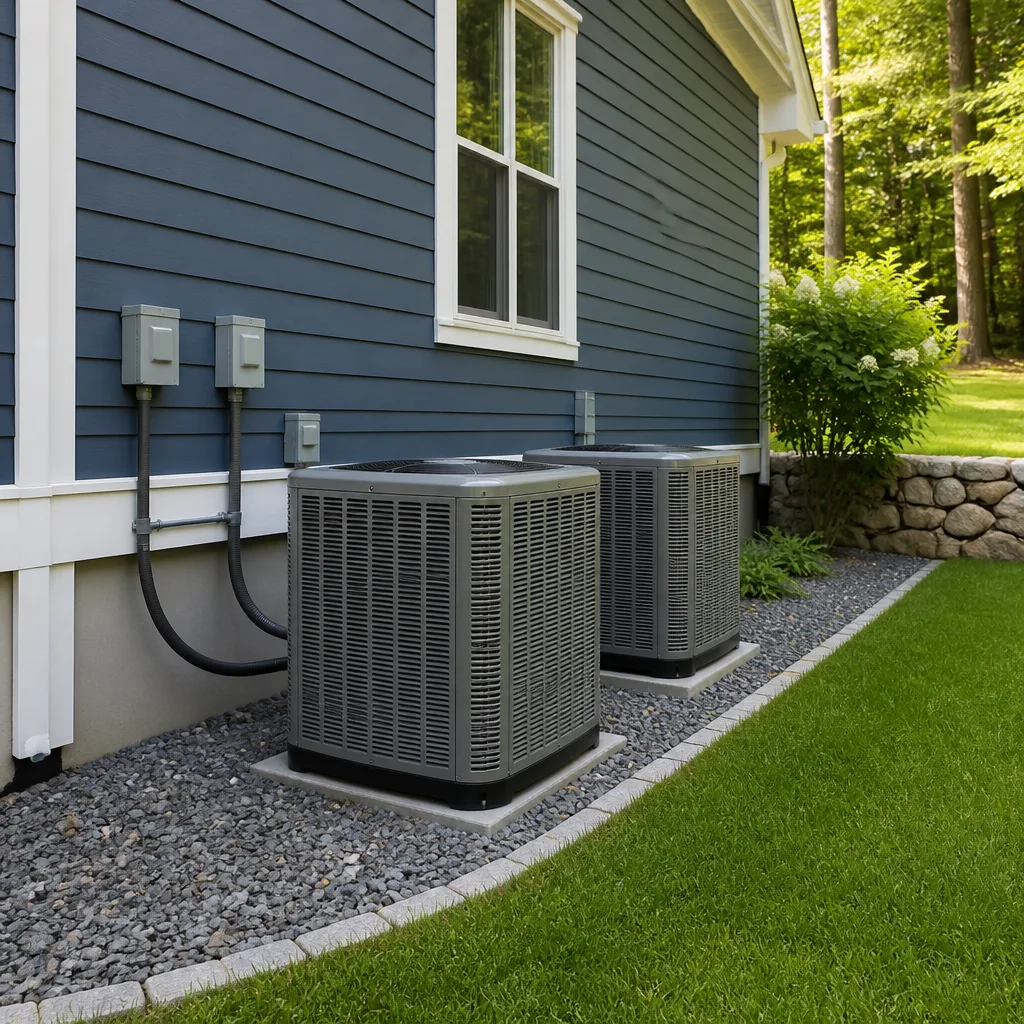 Heat pumps
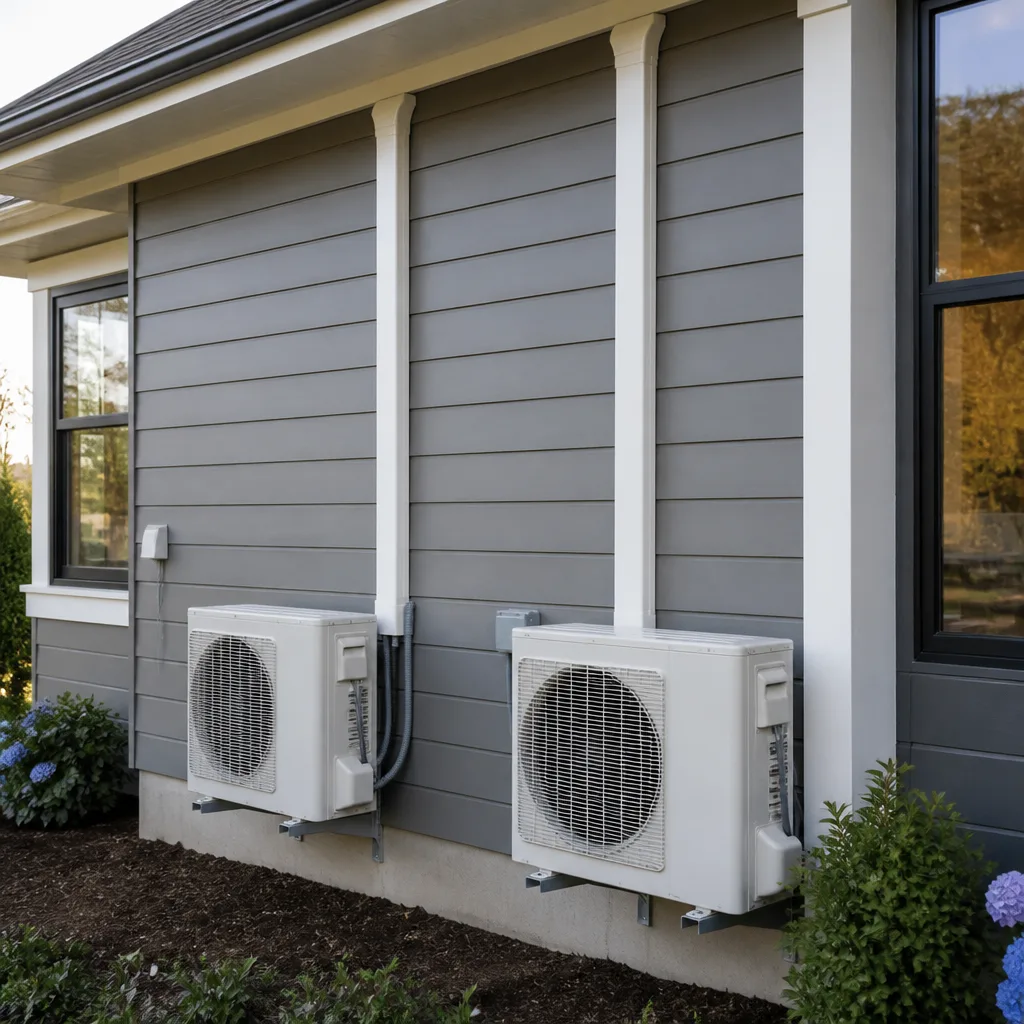 Ductless mini splits
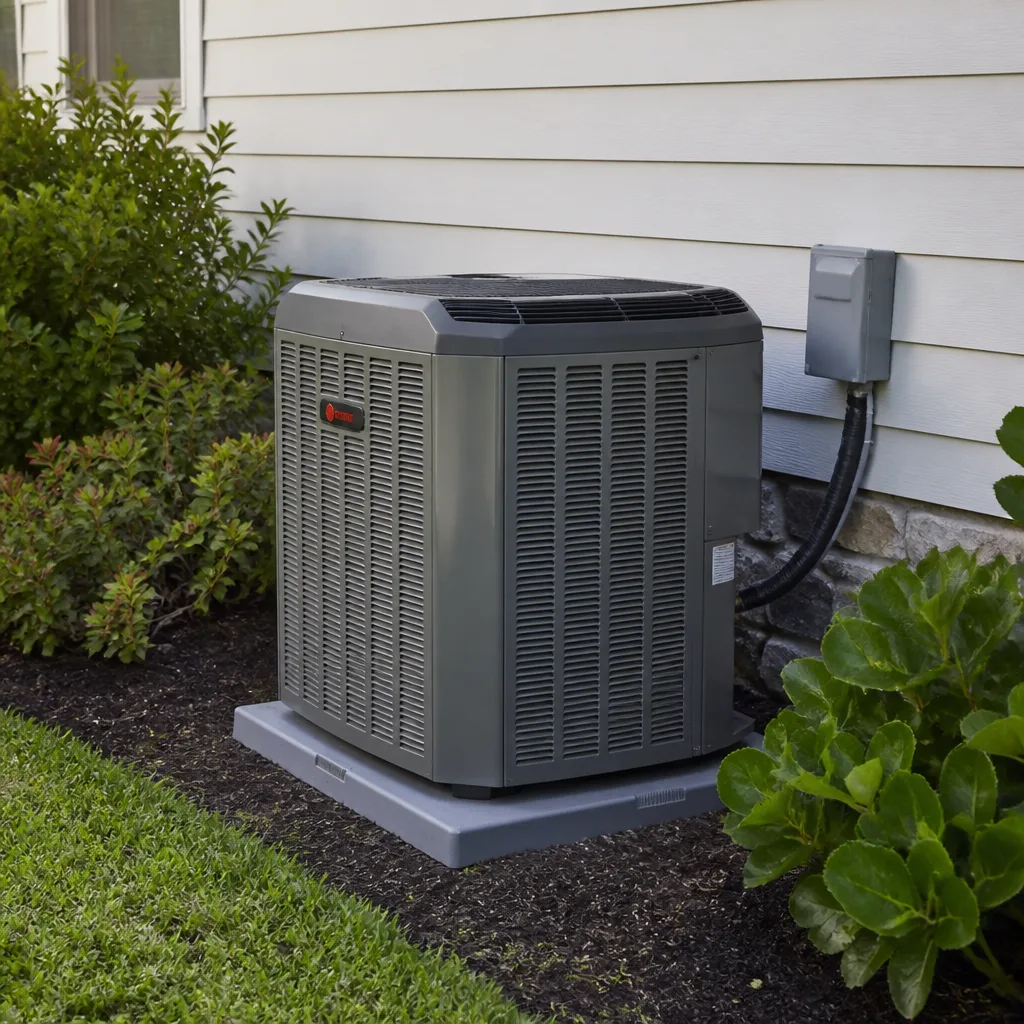 Trane
Trane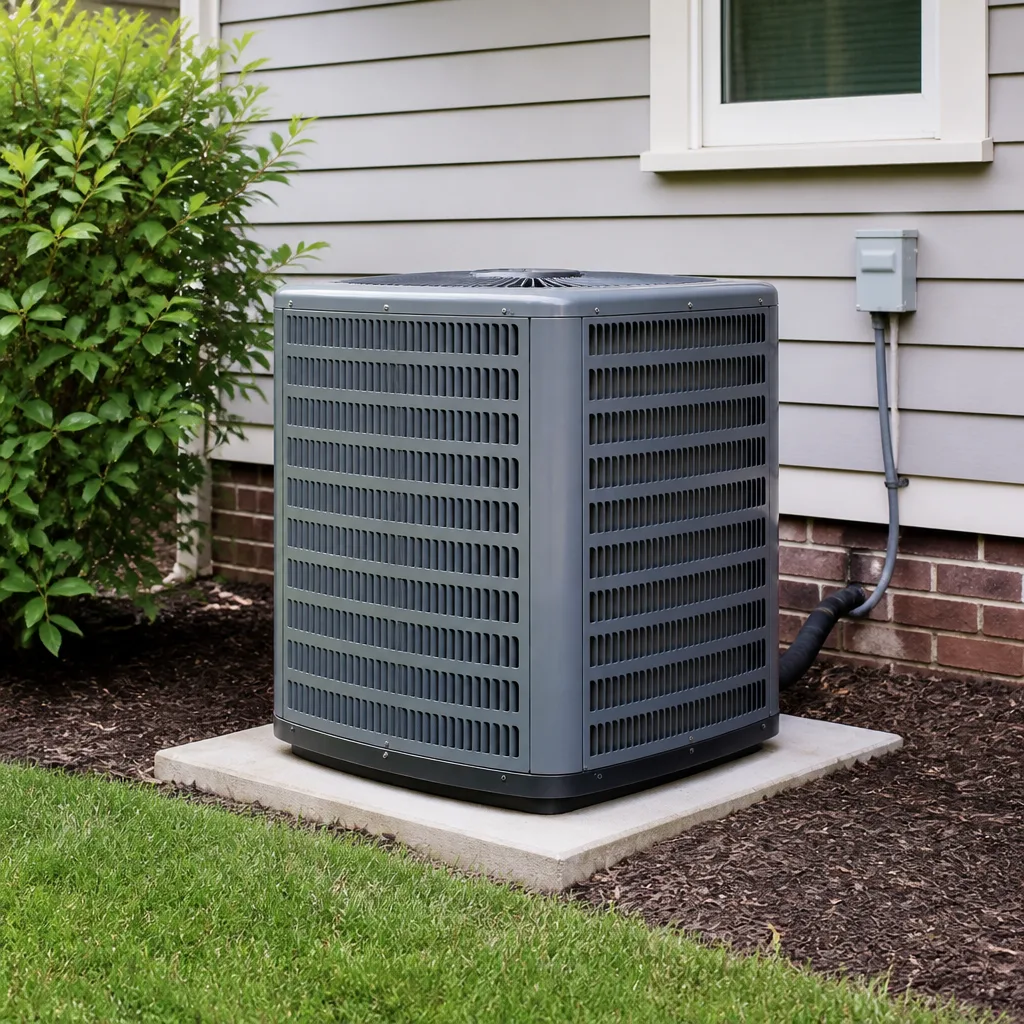 Goodman
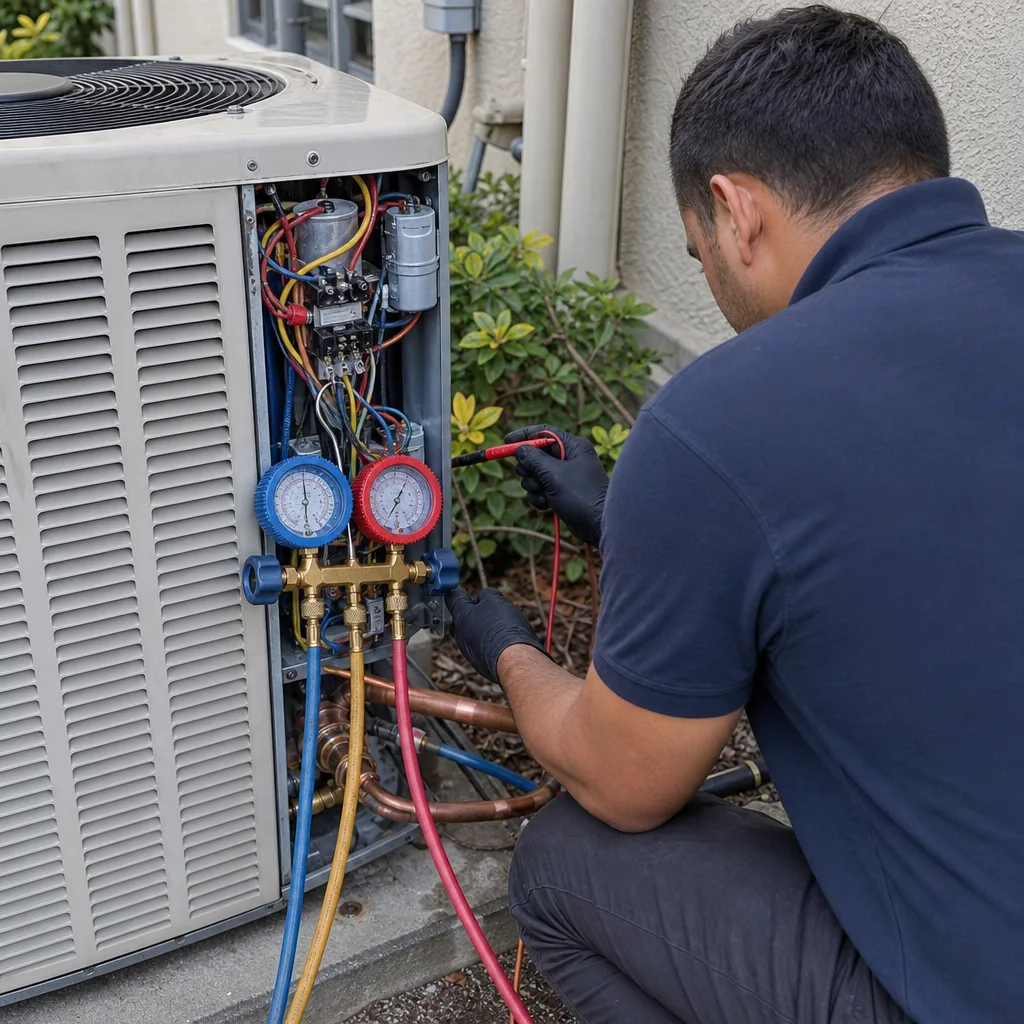
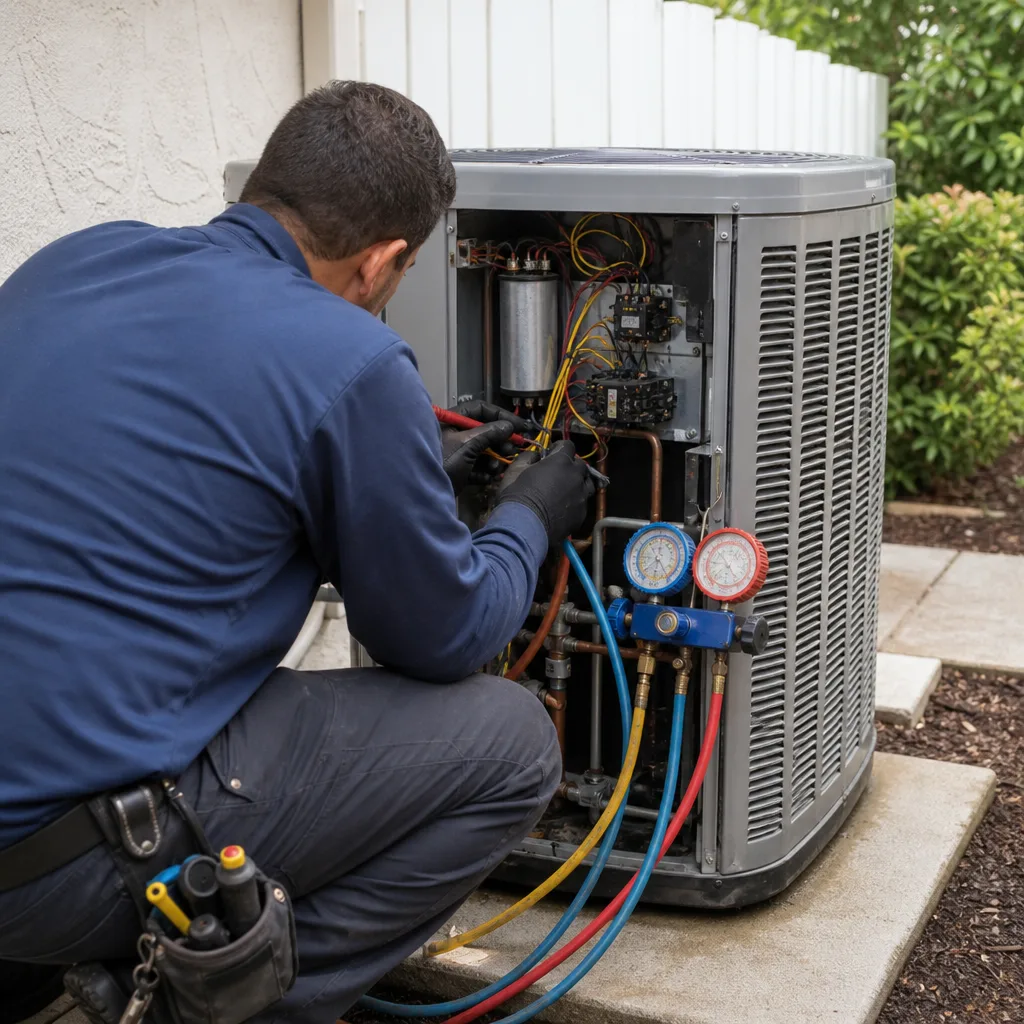
Seasonal tune-up and full diagnostic on your Carrier, Trane, or Goodman system - readings shown to you before any repair is proposed
Diagnosis first, numbers second - you approve the repair price before a single part goes in.
Get your free estimateThe Complete Guide to HVAC in West Palm Beach
The average West Palm Beach home runs its air conditioner roughly 2,900 hours per year. That’s nearly double the national average, and it changes everything about how you should buy, maintain, and repair HVAC equipment here. This guide maps every decision a West Palm Beach homeowner actually faces, from equipment selection to contractor vetting, against the specific conditions of Palm Beach County: salt air, an 11-month cooling season, and a permitting process that trips up more homeowners than any single equipment failure ever will. For more guides & resources, see our full blog.
Quick Answer
HVAC in West Palm Beach means choosing cooling equipment built for coastal salt air and an 11-month runtime, maintaining it twice a year instead of once, and working with a contractor who pulls Palm Beach County permits and verifies technician identity before anyone steps through your door. The right system here is a high-SEER2 heat pump or AC matched to your home’s actual load calculation, protected by coil coatings rated for coastal exposure, and serviced by technicians you can identify by name and photo before they arrive.
Styles & brands we work with
Table of Contents
- Why West Palm Beach’s Climate Changes Every HVAC Decision
- Salt Air and Coil Corrosion: What National Guides Get Wrong
- SEER2 Minimums in Florida: What the Labels Actually Mean Here
- The 11-Month Cooling Season and Your Maintenance Math
- Palm Beach County Permits: The Detail That Voids Warranties
- Equipment Brands That Hold Up in Coastal Humidity
- How to Vet an HVAC Contractor in West Palm Beach
- Repair or Replace: The Coastal Math That Changes the Answer
Why West Palm Beach’s Climate Changes Every HVAC Decision
West Palm Beach sits in ASHRAE Climate Zone 1, the hottest and most humid classification in the continental United States. That’s not marketing language; it’s an engineering designation that dictates minimum efficiency ratings, insulation requirements, and equipment sizing methodology. What a national HVAC guide tells you about furnaces and seasonal checkups simply does not apply here the same way it does in Tampa, Orlando, or anywhere north of the Treasure Coast.
Three facts about the West Palm Beach climate shape every choice you’ll make about your system:
- Cooling degree days here run roughly 4,000 annually. That’s the metric engineers use to measure how hard an AC works over a year. Compare that to Chicago at around 900, and you understand why a unit installed in West Palm Beach ages in dog years. A 12-year-old system in West Palm Beach has often logged the equivalent runtime of a 25-year-old system in the Midwest.
- Humidity persists from April through November. Dew points above 70 degrees are routine for more than half the year. That means your system has two jobs: dropping temperature and removing moisture. Undersized systems never catch up on the hottest days. Oversized systems cycle off too fast and never pull enough humidity out. Either mistake leaves you with a house that’s cold but clammy, or warm and wet.
- Overnight lows in summer often stay above 80 degrees. Your AC does not get a nightly break. In many climates, the system recovers overnight and strain is intermittent. Here, from late June through September, the compressor may run 18 to 20 hours a day. Every inefficiency, every dirty coil, every small refrigerant leak gets punished at a rate you simply won’t see in a climate with cooler nights.
In our experience serving West Palm Beach, we see the same pattern repeat: a homeowner moves here from up north, brings their general assumptions about HVAC, and replaces a system that failed years earlier than expected because those assumptions were wrong for this climate. The fix is not buying the most expensive unit. The fix is buying the right unit for continuous coastal operation, and maintaining it like the workhorse it actually is.
Salt Air and Coil Corrosion: What National Guides Get Wrong
Here’s the point most generic HVAC content misses entirely: West Palm Beach is a coastal market, and the same salt-laden air that rusts patio furniture and pits chrome on cars within months is actively eating your AC’s condenser coil. If you live east of I-95, within a few miles of the Intracoastal or the Atlantic, your outdoor unit is bathed in airborne salt particles every single day. The result is accelerated galvanic corrosion on aluminum and copper coil surfaces, which leads to refrigerant leaks, reduced heat transfer, and compressor failure.
This is not a hypothetical. We regularly replace condenser coils in West Palm Beach that are five to seven years old and look like they spent two decades on a boat deck. The failure pattern is consistent: pinhole leaks form where the coil fins meet the tubing, refrigerant escapes slowly, the system runs longer and longer to hold temperature, and by the time the homeowner notices the electric bill spike, the compressor has been working against low charge for an entire summer.
What should you demand from any contractor before signing a replacement contract?
- Coil coating specifications, in writing. Not all corrosion protection is equal. Ask specifically about epoxy or phenolic coatings applied at the factory. Brands like Trane and Lennox offer factory-applied coastal coatings on select condenser models, and these coatings cost a few hundred dollars more up front but routinely add three to five years of usable life within two miles of salt water. A contractor who can’t answer which coil coating a unit carries is a contractor who doesn’t understand West Palm Beach.
- Copper line set inspection during any replacement. Salt air corrodes the refrigerant piping that runs from your indoor unit to your outdoor unit, especially where the insulation has worn thin. A proper replacement quote includes checking and often replacing the line set, not just swapping the boxes.
- A realistic conversation about placement. Where your condenser sits matters. Units placed on the east or southeast side of a home, exposed directly to ocean breezes, fail faster than units shielded by fencing, landscaping, or the home itself. We’ve helped West Palm Beach homeowners extend equipment life simply by relocating a condenser 15 feet to a more protected corner.
If you live west of 441 or in neighborhoods like Royal Palm Beach or Wellington, salt exposure is less severe, but humidity-related coil fouling still applies. What doesn’t change anywhere in Palm Beach County is the need for drain pan and condensate line care, which leads us to maintenance.
SEER2 Minimums in Florida: What the Labels Actually Mean Here
Since January 2023, the Department of Energy has required all new residential air conditioners and heat pumps sold in the United States to meet SEER2 standards, which measure efficiency under more realistic operating conditions than the old SEER metric. For Florida’s Climate Zone 1, which includes West Palm Beach, the minimum is 15.0 SEER2 for split-system air conditioners and 14.3 SEER2 for split-system heat pumps.
Here’s what national guides get wrong: they tell you to buy the highest SEER2 rating you can afford, assuming a 10 to 15 year payback on the efficiency difference. That math falls apart in West Palm Beach because you’re not running your system 1,200 hours a year like the national average. You’re running it 2,900 hours. Every efficiency point you buy pays back more than twice as fast here as it does in most of the country.
Here’s the practical decision matrix we walk West Palm Beach homeowners through:
- 15 to 16 SEER2 single-stage: This is the value choice. It meets code, it’s reliable, and it costs the least up front. It’s the right answer for a home you’re selling within three to five years, a rental property, or a tight budget. The downside: single-stage equipment runs at full blast or off, which means humidity control is less precise and electrical draw is less efficient than staged options.
- 17 to 19 SEER2 two-stage or variable-speed: This is the sweet spot for a home you plan to live in for five or more years. Two-stage compressors run at partial capacity most of the time, which pulls more moisture out of the air and uses less electricity. In West Palm Beach’s shoulder seasons (October through December, March through May), partial-capacity operation matters more than full-blast cooling, because you need dehumidification even when you don’t need maximum cooling.
- 20+ SEER2 variable-speed inverter systems: These are the quietest, most precise systems on the market, and they make sense in West Palm Beach if you’re planning to stay in the home long-term, you have solar panels, or you’re sensitive to indoor humidity. We tell homeowners the truth: the premium is real, but so is the comfort difference, and the 2,900-hour runtime means the efficiency gain is not theoretical.
One more West Palm Beach-specific note: your air handler, the indoor half of the system, matters as much as the outdoor condenser. In our humidity, an air handler with a variable-speed blower does far more for comfort than a high-SEER outdoor unit mated to a constant-torque air handler. Ask any contractor to explain the blower type in their quote, not just the SEER2 number on the condenser.
The 11-Month Cooling Season and Your Maintenance Math
National HVAC guides tell you to schedule maintenance twice a year: once before cooling season, once before heating season. In West Palm Beach, cooling season doesn’t end. It pauses, briefly, in January. The practical result is that your AC needs two maintenance visits during the cooling season itself, not one cooling and one heating checkup.
Here’s what we recommend for AC Maintenance in West Palm Beach, and why the timing matters:
- Late spring visit (April or May): This prep visit happens before the brutal June heat arrives. It includes a full system inspection, coil cleaning, refrigerant check, drain line flush, and electrical connection tightening. The drain line flush matters more here than in dry climates because West Palm Beach humidity feeds the algae and biofilm that clog condensate lines, which then back up into your air handler pan and eventually through your ceiling. We’ve seen a single overdue drain line cause $8,000 in drywall and flooring damage.
- Late summer or early fall visit (September or October): By September, your system has just survived three months of near-continuous operation. Capacitors weaken, contactors pit, and coils foul under sustained heat load. This visit catches the wear before it becomes a breakdown, and gives us the baseline for any repair decisions before the next summer.
Now the ROI question: does a maintenance plan pay off in West Palm Beach compared to calling for repairs only when something breaks? The plain answer is yes, and the math scales with our climate. A compressor failure caused by a neglected refrigerant leak can cost $2,500 to $4,500 to repair and often triggers replacement conversations. A maintenance visit that catches the leak early costs a fraction of that. When your system runs 2,900 hours a year, small problems become big problems in weeks, not months.
The maintenance plan from Brandt HVAC Co West Palm Beach includes both seasonal visits, priority scheduling if something fails between visits, and no overtime charges if a breakdown happens outside normal business hours. Our technicians receive a written checklist on every visit, and you receive a written report of what was found, what was fixed, and what might need attention in the next 12 months. You should expect the same from any contractor you hire.
Palm Beach County Permits: The Detail That Voids Warranties
Here’s the sentence that should worry every West Palm Beach homeowner replacing an HVAC system: Palm Beach County requires a mechanical permit for any AC or heat pump replacement, and skipping that permit voids the manufacturer’s warranty on your new equipment.
This is not a formality. When your new Trane, Lennox, Goodman, or Rheem system is registered for warranty coverage, the manufacturer asks for the installation details, including whether the installation was permitted and inspected. If the answer is no, the warranty claim on a failed compressor or condenser coil can be denied outright. We’ve seen homeowners save $300 on a permit, then face a $2,800 uncovered compressor replacement two summers later.
The permit process in West Palm Beach works like this:
- The contractor pulls a mechanical permit from Palm Beach County or the City of West Palm Beach building department before work begins.
- The installation is completed according to the Florida Building Code, including proper condensate drainage, electrical disconnects, and equipment clearance.
- An inspector visits the property to verify the installation meets code. This inspection is scheduled by the contractor and takes 10 to 20 minutes.
- Once the inspection passes, the permit is closed, and that closed permit becomes your proof of compliance for warranty and insurance purposes.
How often do homeowners get hurt by skipped permits? Often enough that we make the permit line item explicit on every single replacement quote we write in West Palm Beach. Any contractor who offers to “skip the permit to save you money” is transferring risk to you, and the warranty implications are not disclosed until it’s too late. Ask every bidder: “Does your price include the Palm Beach County permit and inspection?” If the answer is anything other than a clear yes, walk away.
One more point that applies to condominium and townhome owners in West Palm Beach: your HOA may have additional requirements beyond the county permit, including specific equipment brands, noise limits, or installation locations. A good contractor asks about your HOA early in the quoting process. A great contractor asks before you’ve even scheduled the estimate.
Equipment Brands That Hold Up in Coastal Humidity
We service every major residential brand in West Palm Beach, and the honest answer is that no single brand wins every situation. What matters more than the name on the cabinet is the match between the equipment, the installation quality, and the coastal conditions we’ve already covered. That said, certain brands have earned a reputation in Palm Beach County for specific reasons.
Trane builds its condenser coils with a spine-fin design that has held up well in salt-exposure testing, and Trane offers factory-applied coastal protection on select models. We’ve seen 10-year-old Trane condensers in West Palm Beach beachside neighborhoods with coils that still hold charge, which is not true of every brand.
Lennox pushes variable-speed technology harder than most manufacturers, and in a humidity-driven climate like ours, that precision matters. The tradeoff is parts cost, which runs higher than some competitors when repairs are needed after the warranty period.
Goodman and Rheem both build value-focused equipment that meets Florida code and delivers solid reliability at a lower purchase price. For a rental property, a vacation home, or a budget-driven replacement, these brands make sense, provided the installation is done to coastal standards and the coils are protected.
Our guidance to West Palm Beach homeowners is consistent: choose a contractor before you choose a brand. The best Trane in the world installed with a skipped permit, an undersized line set, and no attention to condensate drainage will fail faster than a basic Goodman installed correctly. The contractor’s installation quality, the permit, the coil coating, and the maintenance plan all matter more than the logo.
How to Vet an HVAC Contractor in West Palm Beach
This section matters more than any equipment recommendation in this guide, because the person walking through your door has more impact on your system’s performance, your warranty’s validity, and your family’s safety than any specification on a brochure. Whether to tackle work yourself or hire a pro is covered in our DIY vs Professional HVAC: The West Palm Beach Homeowner’s Decision Guide. West Palm Beach has hundreds of HVAC contractors, and they are not all the same.
Here’s what you should verify before you book a call:
- Licensing. Florida requires HVAC contractors to hold a state-issued license from the Department of Business and Professional Regulation. You can verify any contractor’s license number on the DBPR website in about 90 seconds. If a contractor hesitates to provide a license number, that conversation is over.
- Insurance. The contractor should carry both general liability insurance and workers’ compensation coverage. Without workers’ comp, an injury on your property becomes your legal problem. Ask to see certificates of insurance, and confirm they’re current.
- Technician identity and background checks. This is where most contractors fall short, and where we think West Palm Beach homeowners deserve better. The Brandt HVAC Co West Palm Beach standard, we call it the Threshold Verified standard, works like this: every technician is background-checked and identity-verified before they’re hired. Before every visit, you receive the technician’s name and photo so you know exactly who to expect. When the technician arrives, they show a photo ID badge at the door before stepping inside. If someone arrives who you were not told to expect, that visit is on us and we make it right. No other standard we know of goes this far, and we think it should be the floor for this industry, not the ceiling.
- Written pricing before work starts. A contractor who can’t or won’t put the price in writing before touching your system is not offering you a quote; they’re offering you a surprise. Every job we do at Brandt HVAC Co West Palm Beach begins with a written price. No work starts before you see it, agree to it, and sign it. No exceptions.
- Written guarantees on repairs. When a contractor completes a repair, ask what the guarantee covers and for how long. Our AC Repair in West Palm Beach work includes a written guarantee. If a repair fails within the guarantee period, we return at no charge, covered by our 365-Day Done Right Promise. If it’s not done right, we make it right. Every contractor should be able to state their guarantee in one sentence. If they can’t, they don’t have one.
West Palm Beach’s position as a service-industry town means there’s no shortage of fly-by-night operators who show up in an unmarked van, quote a low number, and disappear. Your vetting process is your protection. Take the five minutes to check the license, confirm the insurance, and ask about the technician before the appointment.
The Brandt Name and What It Means
One question we get asked in West Palm Beach: where does the name Brandt come from? It comes from an old word for a firebrand, a burning stick carried to provide warmth. When the company’s founder chose the name in 2003, it was a nod to the HVAC trade’s original purpose: keeping a home warm through cold nights. In West Palm Beach, our work skews heavily toward cooling, but the root idea holds. We exist to keep a home comfortable, no matter what the thermometer outside says.
Who Answers the Phone Matters
West Palm Beach AC failures do not respect business hours, and neither do our phones. Brandt HVAC Co West Palm Beach has a live person answering calls 24 hours a day, 7 days a week, including nights, weekends, and holidays. No voicemail, no callback queue, no automated phone tree. You call, a person answers, and that person starts the process of getting help to your door. In an August heat wave with a failed compressor and a house full of kids or an elderly parent, that difference is not a convenience. It’s the whole point.
Repair or Replace: The Coastal Math That Changes the Answer
Every West Palm Beach homeowner eventually faces this decision: put another few hundred dollars into an aging system, or commit to a $7,000 to $15,000 replacement. National guides default to the “if repair cost exceeds 50% of replacement value, replace” rule. That rule misses coastal context.
Here’s the West Palm Beach-specific math we walk through with homeowners:
- System age. In Palm Beach County, an AC system’s realistic useful life is 10 to 15 years, not 15 to 20. The 2,900-hour annual runtime means a 12-year-old system here has the wear equivalent of a 22-year-old system in a northern climate. If your system is 10 or older and the repair estimate is north of $800, the replacement conversation is usually the right one.
- Coil condition. If your condenser coil is showing corrosion-related refrigerant leaks, replacing the coil alone is a band-aid. The compressor has been running with low charge, which means it’s been overheating, which means its lifespan is shortened. Replacing a coil on an 11-year-old coastal unit often leads to a compressor failure within 18 months. That’s not a prediction; it’s a pattern we’ve seen repeat dozens of times in West Palm Beach.
- Refrigerant type. If your system uses R-22 refrigerant, the answer is almost always replace. R-22 production stopped in 2020, so available supplies are recovered and reclaimed material, and the price per pound has risen to the point where a simple recharge can cost $600 to $1,200. Spending that on a 12-year-old system is throwing money at equipment that’s already past its coastal lifespan.
- Warranty status. As covered earlier, a skipped permit or an unregistered system means no warranty coverage on major components. If your compressor dies at year 9 and you have no warranty, you’re looking at a $2,500 to $4,500 repair on a system with maybe 3 to 5 years of coastal life left. The replacement pencil gets sharper.
The honest answer we give West Palm Beach homeowners is this: once a system passes year 10 in this climate, every repair is a bridge, not a destination. A good bridge gets you through the season while you plan and budget for replacement on your schedule, not on the compressor’s schedule. A bad bridge is a repair that costs more than the remaining life of the system. We’ll tell you which one you’re looking at, in writing, before any work starts.
Common Mistakes to Avoid
- Skipping the permit to save a few hundred dollars. This voids your manufacturer’s warranty in Palm Beach County and turns a $300 savings into a potential multi-thousand-dollar uncovered failure. The permit protects you, not the contractor.
- Buying the cheapest coil and ignoring coastal protection. Within five miles of salt water, an unprotected condenser coil is a timer set to about five years. Paying for factory-applied coil coating is one of the highest-ROI decisions a West Palm Beach homeowner can make.
- Replacing the outdoor unit without addressing the indoor air handler. Mismatched systems lose efficiency, struggle with humidity control, and often fail early. The air handler and condenser work as a pair, and coastal replacement means evaluating both.
- Ignoring condensate drain maintenance. The humidity that makes West Palm Beach feel like West Palm Beach is the same humidity that clogs your drain line and sends water through your ceiling. A simple seasonal flush prevents a cascade of damage.
- Letting a contractor skip the technician identity step. You deserve to know who is coming to your home before they arrive, and that person should show identification at the door. A contractor who won’t tell you who to expect is not a contractor you want inside your house.
- Chasing the lowest quote without comparing scope. A West Palm Beach HVAC quote that excludes the permit, uses the existing corroded line set, and skips coil protection is not cheaper. It’s incomplete. Compare line items, not bottom lines.
See the difference
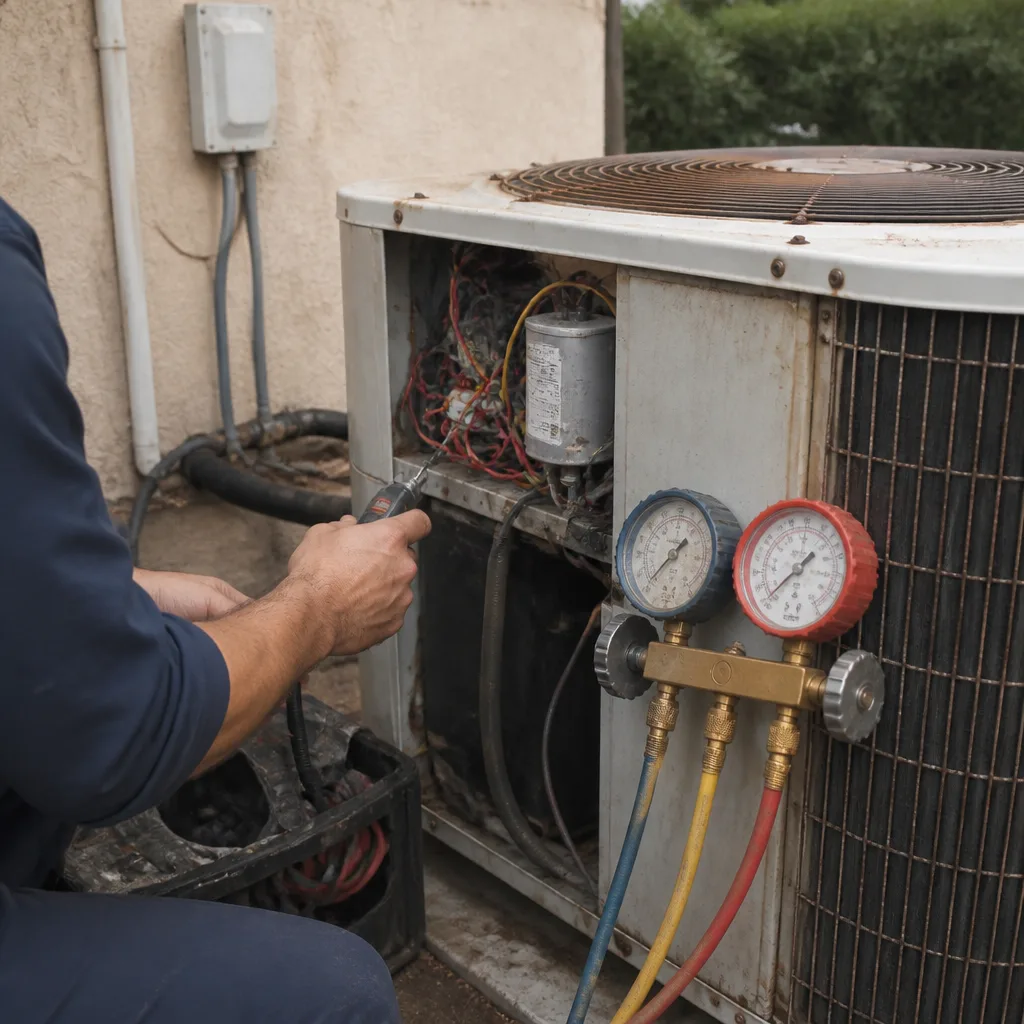 Before
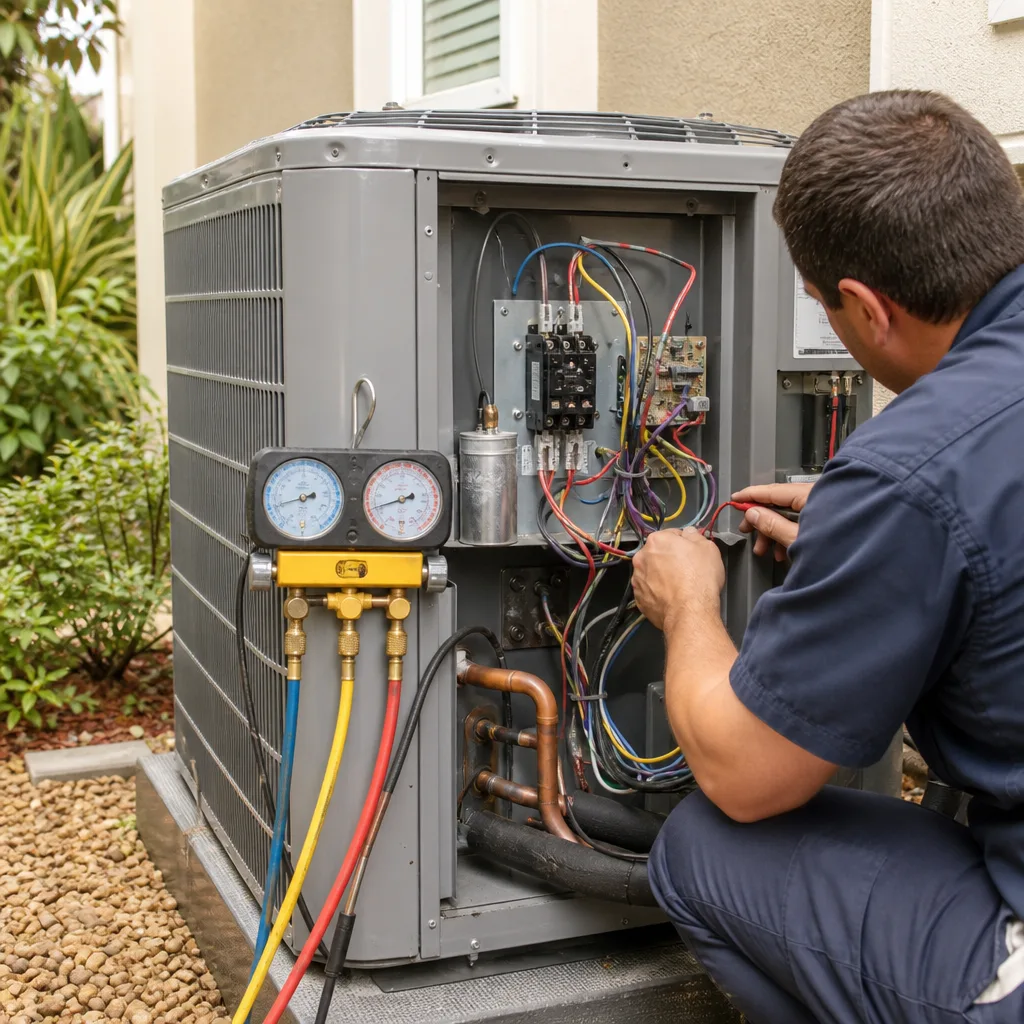 After
After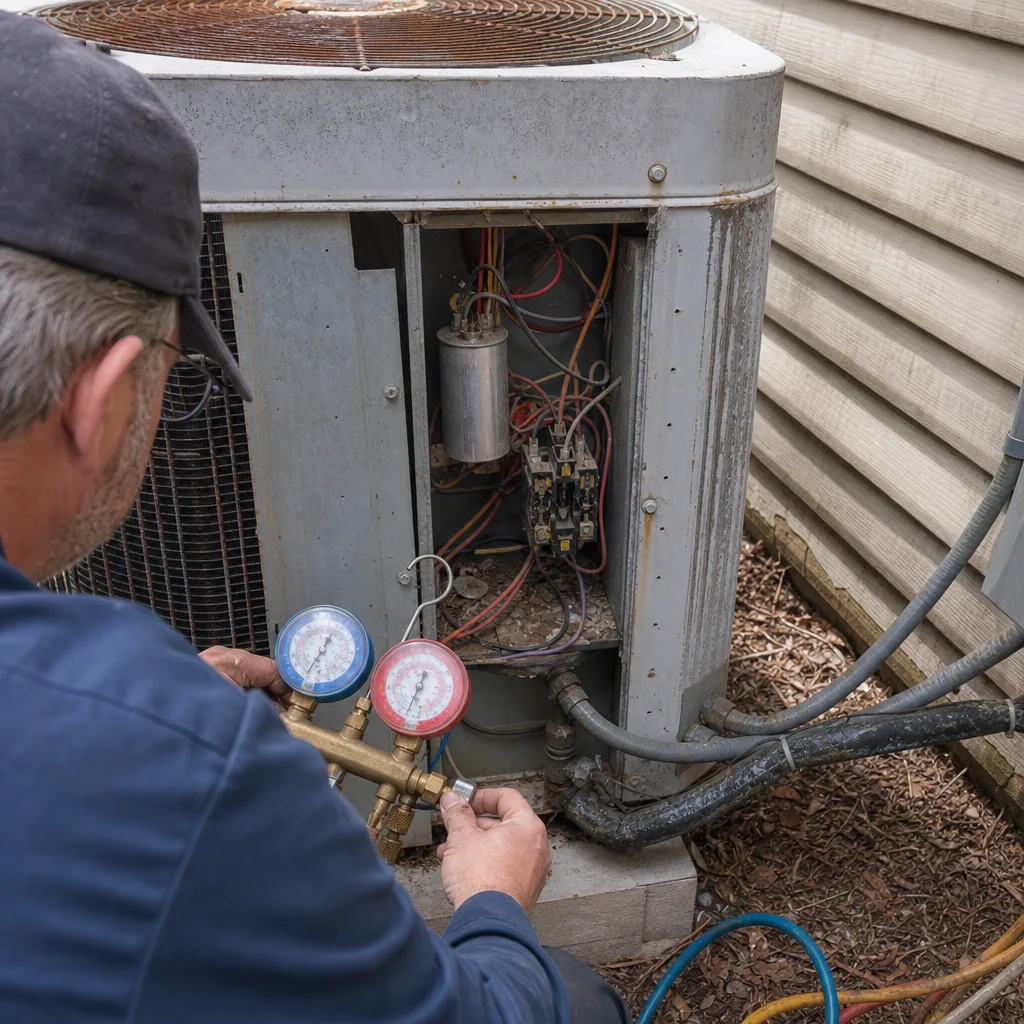 Before
 After
After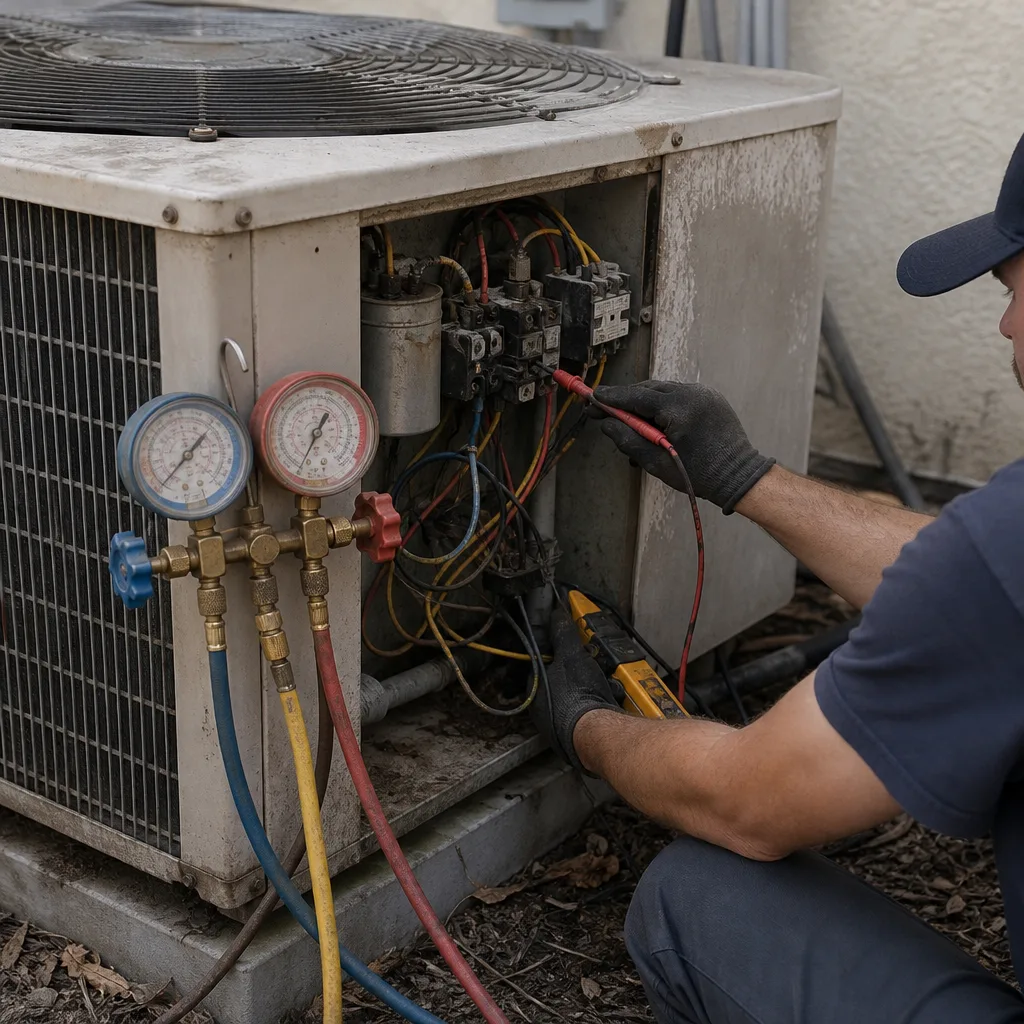 Before
 After
AfterWhen to Call a Professional
Call a professional when you hear sounds that weren’t there before: grinding, screeching, or banging from the outdoor unit. Call when your system runs but your home doesn’t reach the set temperature, or when the electric bill spikes without an obvious explanation. Call when you see ice on the refrigerant lines, water pooling around the air handler, or a musty smell from the vents. And call before you replace anything, because the decisions covered in this guide, permits, coil coatings, SEER2 ratings, and contractor vetting, are decisions a licensed professional should help you make with your specific home in front of them. Brandt HVAC Co West Palm Beach offers free estimates in West Palm Beach, call (728) 220-0996.
Frequently Asked Questions
A full-system replacement in West Palm Beach typically runs $7,000 to $15,000, depending on the SEER2 rating, brand, and whether you need coastal coil protection, new line sets, or ductwork modifications. See our HVAC Cost Breakdown: The West Palm Beach Homeowner’s Reference for 2026 for detailed pricing factors. The permit and inspection are usually included in a complete quote, and any contractor who excludes them is giving you an incomplete price.
Minimum Florida code is 15.0 SEER2 for split-system ACs and 14.3 SEER2 for heat pumps, but a two-stage or variable-speed system in the 17 to 19 SEER2 range delivers meaningfully better humidity control and lower electric bills given the 2,900-hour annual runtime in West Palm Beach.
Twice a year is the minimum in West Palm Beach: once in late spring before the summer heat, and once in late summer or early fall after peak strain. Two visits, not one, because the cooling season runs 11 months and the system accumulates wear continuously.
Yes, and the damage is measurable. Airborne salt accelerates condenser coil corrosion, leading to refrigerant leaks and shortened compressor life, especially east of I-95 and near the Intracoastal. Factory-applied coil coatings and proper condenser placement materially reduce this risk.
Yes. A mechanical permit is required for AC and heat pump replacements in Palm Beach County, and skipping it voids your manufacturer’s warranty. The permit includes an inspection that verifies your installation meets Florida Building Code.
In West Palm Beach, the replacement conversation usually makes sense once a system passes 10 years and the repair estimate exceeds $800 to $1,000. The coastal climate shortens equipment life, so a repair on an aging system is a bridge, not a destination. For an exact quote on your situation, call (728) 220-0996.
The Bottom Line
HVAC in West Palm Beach is a different game than HVAC anywhere else in Florida, and certainly anywhere else in the country. The 2,900-hour cooling season, the salt air, the humidity, and the permitting rules all point toward the same conclusion: choose a contractor who understands coastal equipment, verify their licenses and insurance, demand written pricing and guarantees, and maintain your system twice a year. The right decisions buy you years of reliable performance. The wrong ones transfer risk to you. If you want a contractor who will walk you through every one of these decisions in plain language, with no pressure and a written price before any work starts, Brandt HVAC Co West Palm Beach is ready when you are. Call (728) 220-0996 for a free estimate.
Written by Devin Marlowe, Owner at Brandt HVAC Co West Palm Beach, serving West Palm Beach since 2003.