
Last updated October 16, 2026
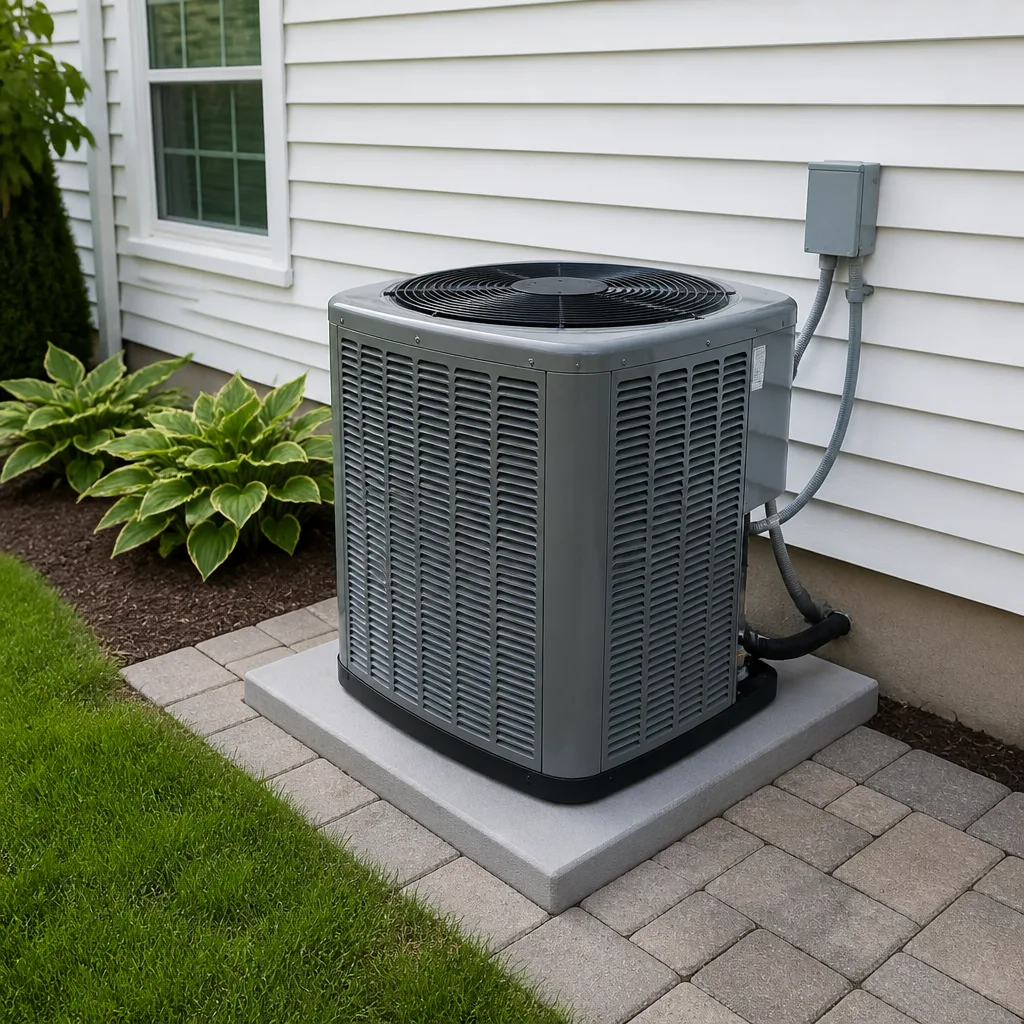 AC repair
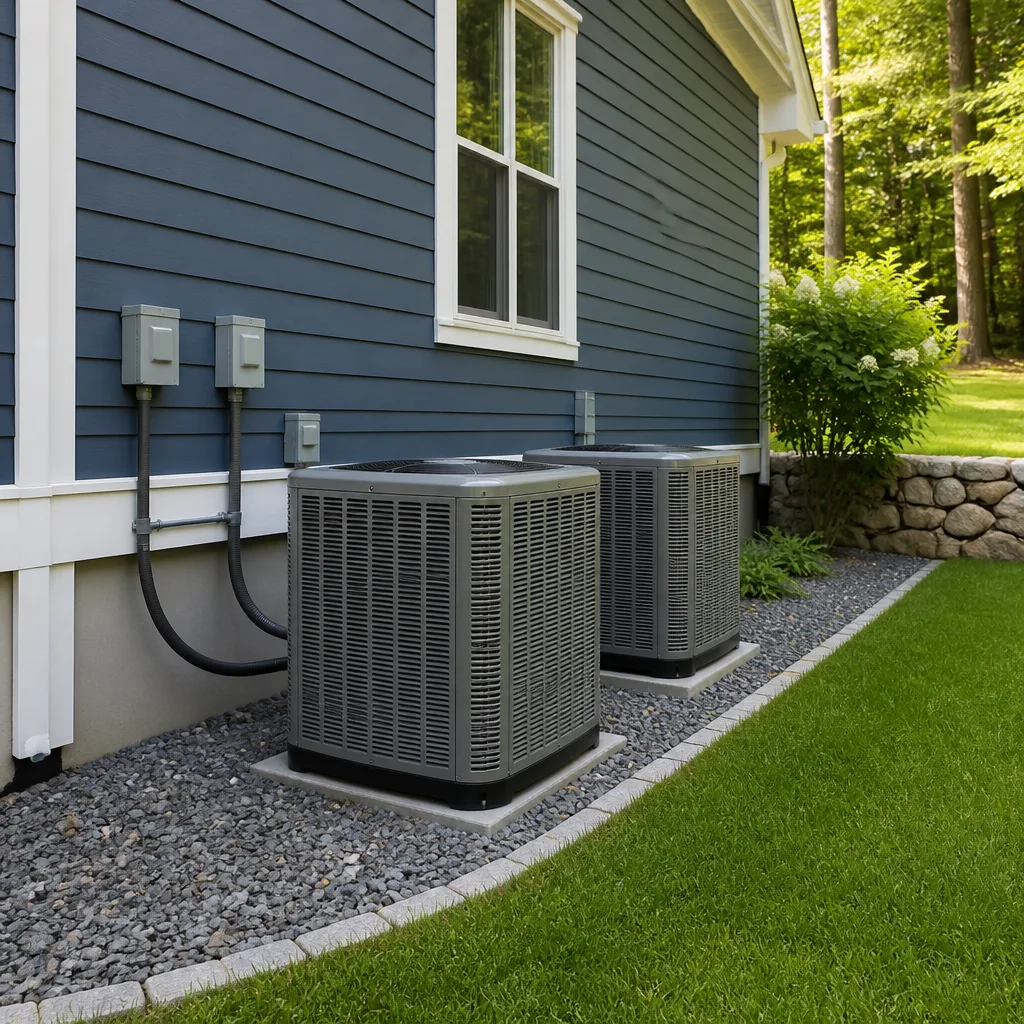 Heat pumps
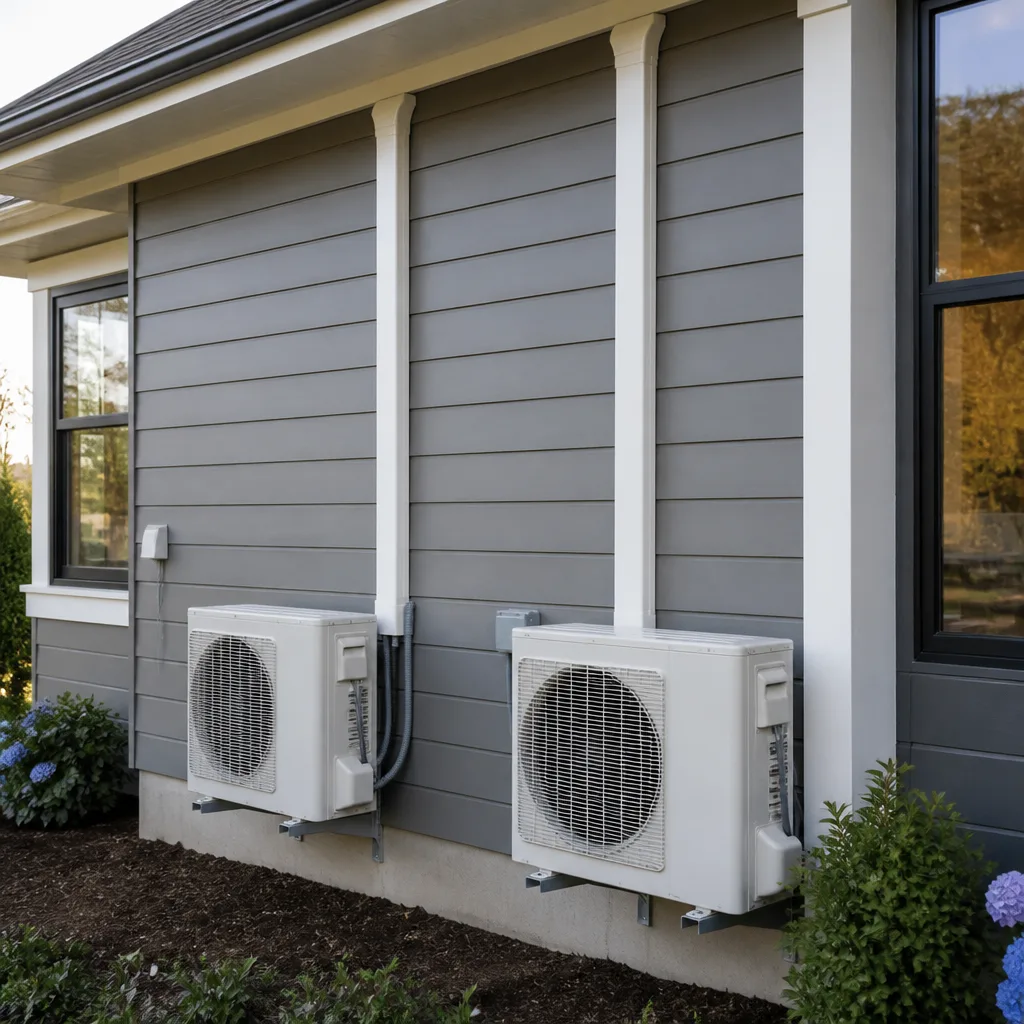 Ductless mini splits
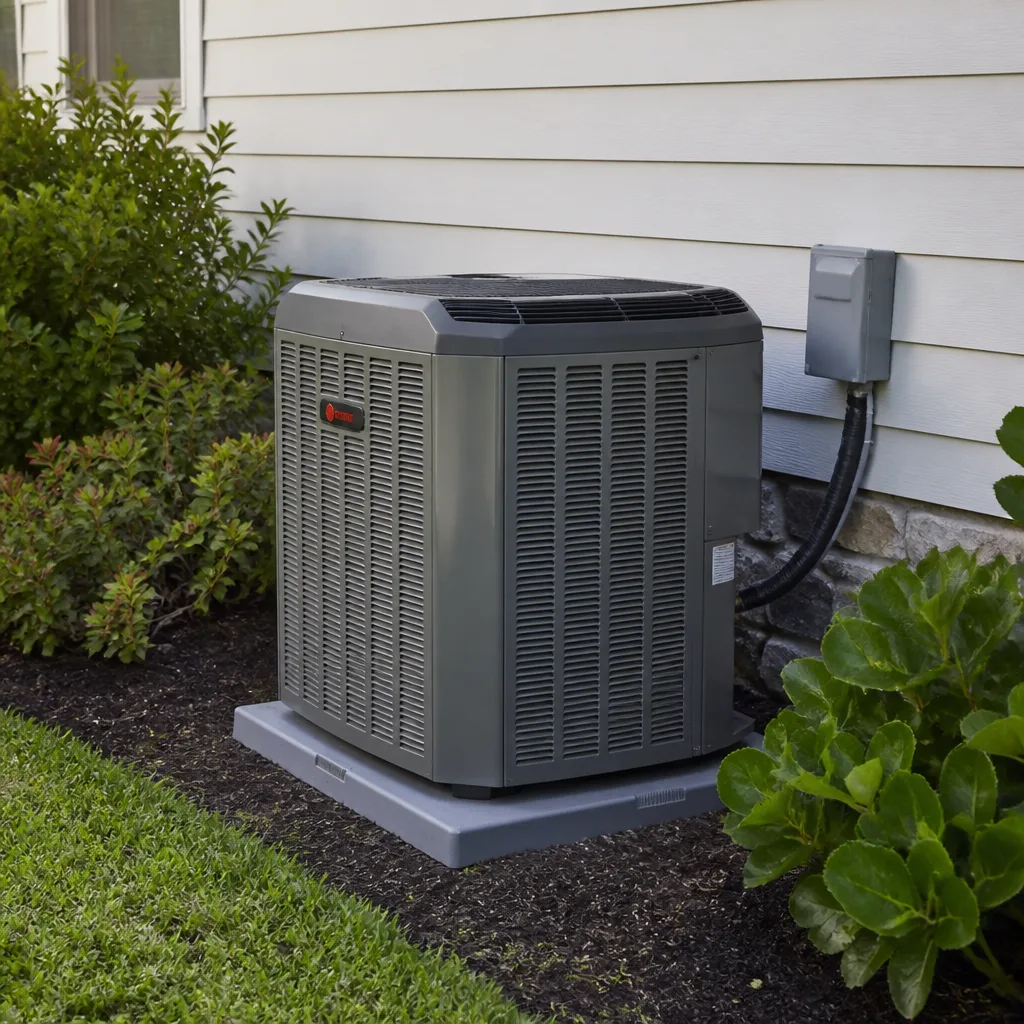 Trane
Trane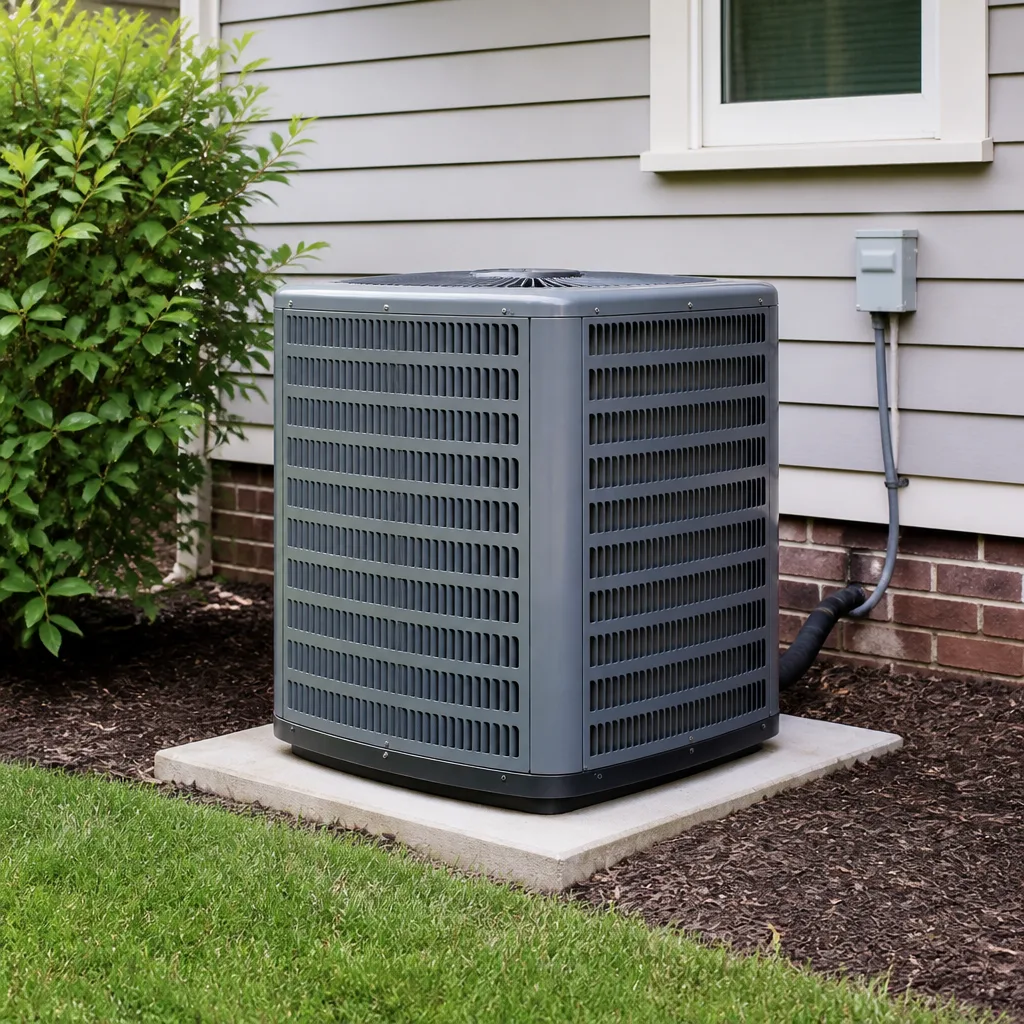 Goodman
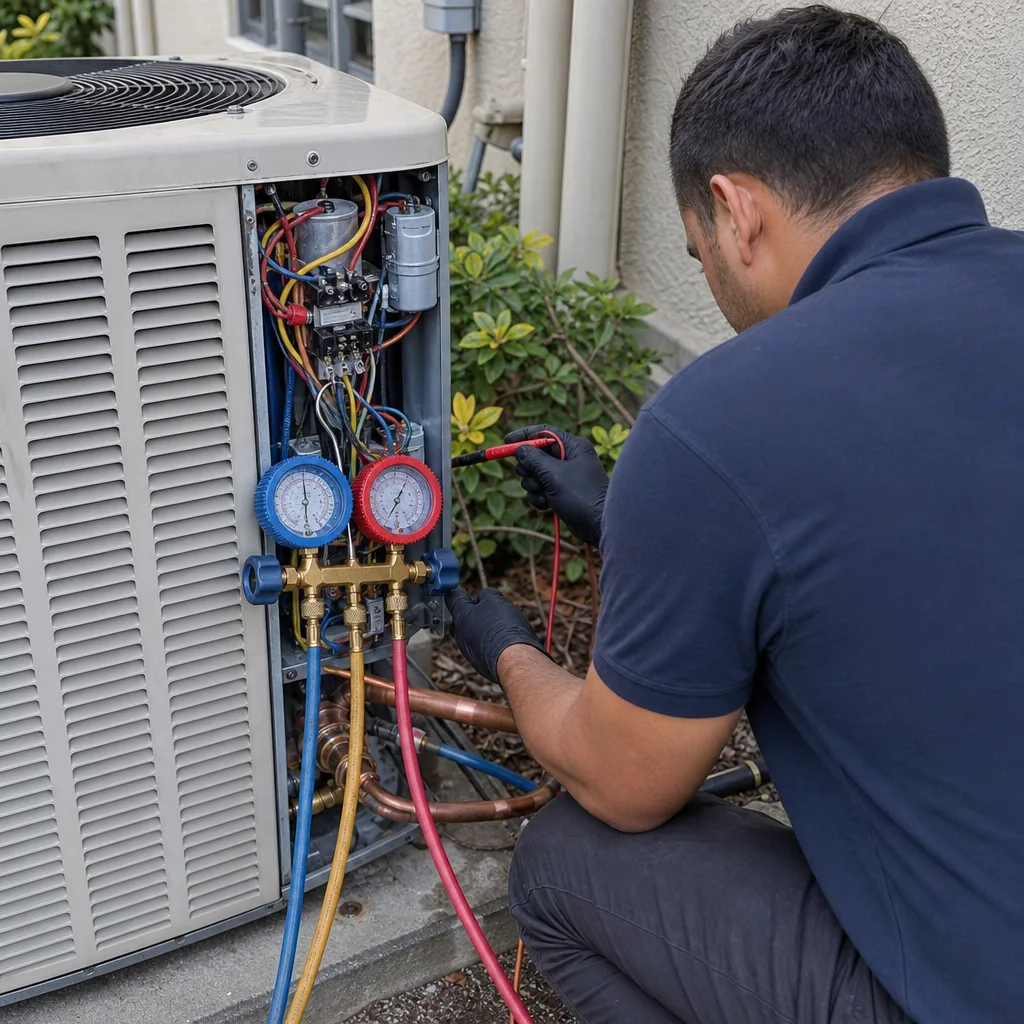
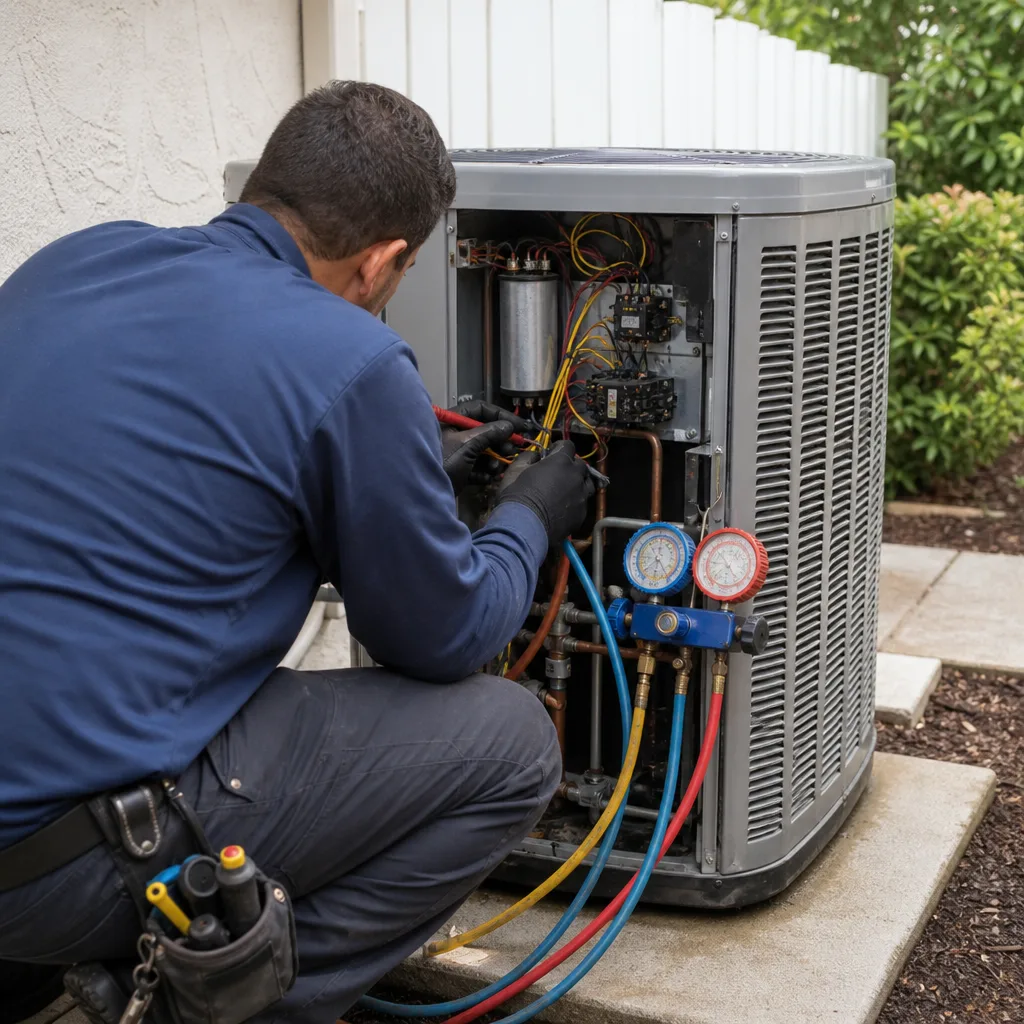
Seasonal tune-up and full diagnostic on your Carrier, Trane, or Goodman system - readings shown to you before any repair is proposed
Diagnosis first, numbers second - you approve the repair price before a single part goes in.
Get your free estimateDIY vs Professional HVAC: The West Palm Beach Homeowner’s Decision Guide
Every summer, thousands of West Palm Beach homeowners type “DIY AC fix” into Google while their living room climbs past 85 degrees. What most don’t realize is that one of the most common DIY refrigerant “recharge kits” sold online would make them legally liable under federal law the moment they connect it. This guide draws the real line: what you can legally and safely do yourself, where DIY crosses into liability in Florida, and how to protect your warranty, your home, and your family when you do need to call someone in West Palm Beach.
Styles & brands we work with
Quick Answer
Most HVAC work in West Palm Beach falls into two buckets: routine maintenance you can legally do yourself (filters, drain lines, coil cleaning, thermostat batteries) and anything touching refrigerant, electrical wiring, or gas connections, which requires a Florida CAC-licensed contractor by law. If you’re unsure how to find one, read our How to Hire a HVAC Contractor in West Palm Beach: A Step-by-Step Guide. The real cost difference isn’t the repair itself. It’s the warranty voiding, code violations, and safety risks that follow when DIY crosses the legal line. If the task involves refrigerant, line voltage, or combustion, call a licensed professional.
Table of Contents
- The Legal Boundary: What Florida Law Says You Can and Cannot Touch
- EPA Section 608: Why That Recharge Kit Is a Federal Problem
- The Warranty Fine Print: What DIY Actually Costs Long-Term
- Six Tasks That Are Genuinely Safe to Do Yourself in West Palm Beach
- What Belongs in a Professional’s Hands, Every Time
- How to Vet Who You Let In: Identity Verification Before Work Begins
- What DIY vs Professional Actually Costs in West Palm Beach
- Common Mistakes to Avoid
- When to Call a Professional
- Frequently Asked Questions
- The Bottom Line
The Legal Boundary: What Florida Law Says You Can and Cannot Touch
Florida Statute 489.105 is specific about what counts as HVAC contracting, and the definition is broader than most homeowners assume. Under Florida law, installing, repairing, altering, servicing, or maintaining any air conditioning system for compensation requires a state-certified or registered contractor with a CAC license. That’s the commercial side. But here’s what matters for the DIY question: the statute also covers any work on refrigerant lines, duct systems, and electrical connections tied to HVAC equipment when that work affects system performance or safety.
The practical line for a West Palm Beach homeowner looks like this:
- You can legally do: replace air filters, clean condenser coils with water and a soft brush, clear a clogged condensate drain line with a wet/dry vac, replace thermostat batteries, trim vegetation around the outdoor unit, and pour a cup of white vinegar down the drain line as preventive maintenance.
- You cannot legally do: add, remove, or recover refrigerant, braze or solder refrigerant lines, replace a compressor, capacitor, contactor, or blower motor if it involves line-voltage wiring, modify ductwork, or install any new HVAC equipment that connects to the home’s electrical panel.
- The gray zone: replacing a thermostat is technically permitted for a homeowner, but if that thermostat controls a heat pump or multi-stage system and you miswire it, you can burn out a control board. We’ve seen that exact repair in neighborhoods from Flamingo Park to Ibis Golf & Country Club, and it’s never cheap.
Florida also requires a permit for any HVAC replacement or major modification, and HVAC Permits, Codes & Inspections in FL: What You Need to Know covers exactly what that entails. A licensed contractor pulls that permit, schedules the inspection, and carries the liability if the work fails inspection. A homeowner who skips the permit saves a few hundred dollars and creates a disclosure problem when selling the house.
EPA Section 608: Why That Recharge Kit Is a Federal Problem
Here’s the part that surprises most West Palm Beach homeowners: buying a can of refrigerant at an auto parts store and connecting it to your home AC is not just a bad idea. It’s a violation of federal law. EPA Section 608 of the Clean Air Act prohibits anyone without Section 608 certification from purchasing or handling refrigerants used in residential air conditioning systems, including R-410A and the newer A2L refrigerants being phased in through 2026 and beyond.
The legal mechanics are straightforward. A single can of R-410A sold in a retail store is not the same product a licensed contractor buys through approved supply houses. Those automotive recharge kits at the parts counter are formulated for car systems, not residential HVAC. Connect one to your home condenser and you have:
- A refrigerant that is chemically incompatible with your system’s oil and seals, which can destroy the compressor within weeks.
- No way to measure superheat or subcooling, which means even the correct refrigerant, added blind, can overcharge the system and cause a compressor failure.
- A documented federal violation if the EPA investigates, with fines that have historically run from thousands to tens of thousands of dollars for individuals.
In our experience across Palm Beach County, we regularly see systems that were “topped off” by a well-meaning homeowner or handyman, and the result is a compressor that fails within one cooling season. A proper refrigerant recharge, done by a licensed contractor, includes leak detection, recovery of any remaining refrigerant, repair of the leak itself, and a precise charge weighed to manufacturer specification. You cannot do that with a can and a hose.
The Warranty Fine Print: What DIY Actually Costs Long-Term
Most major residential HVAC brands, including Goodman, Rheem, York, and Daikin, have updated their warranty terms as of 2026 to explicitly require installation and service by a licensed contractor. The language varies by manufacturer, but the substance is consistent: if the manufacturer determines that the failure resulted from improper installation, unauthorized modification, or service by an unlicensed person, the warranty is void. Not prorated. Void.
For a West Palm Beach homeowner, that means a $2,000 compressor failure on a 4-year-old system could be a full out-of-pocket expense if the system shows signs of DIY work. The manufacturer’s warranty on most residential equipment runs 5 to 10 years on parts, sometimes 12 on compressors for select Goodman and Daikin models. That’s real money being risked to save a $150 service call.
Then there’s the labor warranty. A licensed contractor typically provides their own written labor warranty, often 1 to 2 years. At Brandt HVAC Co West Palm Beach, every repair includes a written guarantee, and if that repair fails within the guarantee period, we return at no charge under our 365-Day Done Right Promise. No homeowner can offer themselves that.
Insurance is another quiet cost. If a DIY repair causes water damage from a condensate leak or an electrical fire from a bad wiring connection, your homeowners insurance company will ask who performed the work. A homeowner without a license and permit may find the claim denied. We see this specifically in West Palm Beach’s older housing stock, where wiring and drain configurations are less forgiving.
Six Tasks That Are Genuinely Safe to Do Yourself in West Palm Beach
Let’s be clear about what we encourage. There are six HVAC tasks that are legal, safe, and genuinely cost-effective for a West Palm Beach homeowner to perform without a license. None of them touch refrigerant, line voltage, or gas. All of them genuinely improve system performance in South Florida’s heat and humidity.
1. Replace the Air Filter Every 30 to 90 Days
In West Palm Beach, where AC systems run 3,000-plus hours a year, filters clog faster than in any northern climate. A dirty filter forces the blower motor to work harder, reduces airflow, and can cause the evaporator coil to freeze. Buy MERV 8 to MERV 11 filters, check the size printed on the existing filter frame, and replace every month during peak cooling season. Higher MERV is not always better here. MERV 13 filters without a compatible system can choke airflow in older homes.
2. Clear the Condensate Drain Line Monthly
Florida’s humidity means your AC pulls gallons of moisture out of the air every day. That water drains through a PVC line, and that line grows algae. Once a month, pour a cup of white vinegar down the drain line at the indoor unit. If the line backs up, use a wet/dry vacuum at the outdoor drain outlet to pull the blockage out. A clogged drain line is the single most common cause of ceiling water damage in West Palm Beach homes.
3. Wash the Outdoor Condenser Coil
Cut power at the breaker, then rinse the outdoor unit with a garden hose on a gentle spray setting, spraying from the inside outward to push dirt and grass clippings out rather than deeper in. Do this every few months, especially after storms or landscaping work. Do not use a pressure washer. Coastal salt air in West Palm Beach means this small habit extends compressor life measurably.
4. Keep the Area Around the Outdoor Unit Clear
Your condenser needs 2 feet of clearance on all sides and 5 feet above. Trim palm fronds, shrubs, and any vegetation that blocks airflow. In West Palm Beach’s dense landscaping, this is a spring and summer recurring task. Good airflow is a free efficiency gain.
5. Replace Thermostat Batteries and Check Settings
If your thermostat screen goes blank or the system short-cycles, check the batteries before calling anyone. Also confirm the thermostat is set to “cool” and “auto” rather than “on,” which runs the fan constantly and can increase indoor humidity.
6. Inspect and Straighten Coil Fins
After rinsing the outdoor unit, look for bent fins on the coil face. A fin comb, available at hardware stores for under $15, can straighten light bends. This is slow, careful work, but it restores airflow and costs almost nothing.
What Belongs in a Professional’s Hands, Every Time
There is a category of HVAC work where the risk to your home, your legal standing, or your physical safety is simply too high to DIY. We say this not to protect our business, but because we’ve repaired the aftermath of all of these in West Palm Beach:
- Anything involving refrigerant. Leak detection, recovery, evacuation, and recharge all require EPA Section 608 certification and equipment that costs more than a service call.
- Any electrical component replacement. Capacitors store voltage even with the breaker off. Contactors, blower motors, and control boards involve line voltage. A wrong connection can cause a fire.
- Compressor replacement. This requires recovering refrigerant, brazing with nitrogen purge, replacing the filter drier, pressure testing, vacuuming to 500 microns or below, and weighing in a precise charge. There are no shortcuts.
- Furnace or gas line work. Even in South Florida, many homes have gas furnaces. A gas leak from an improper connection is a life safety issue. Do not touch it.
- Ductwork modification. Improper duct sizing reduces airflow, increases static pressure, and can cause the evaporator coil to freeze or the compressor to fail prematurely.
- Any new equipment installation. A full system replacement requires a permit, a Manual J load calculation, proper refrigerant line sizing, and electrical work that meets Florida Building Code.
If your system needs AC repair in West Palm Beach, a licensed contractor handles the legal, warranty, and safety layers automatically. That’s what the license exists for.
How to Vet Who You Let In: Identity Verification Before Work Begins
For many West Palm Beach homeowners, especially those who are home alone, older, or raising young children, the hardest part of calling for HVAC service isn’t the cost. It’s opening the door. That concern is valid, and it’s why how a technician is introduced matters as much as what they know.
The Threshold Verified standard exists for exactly this situation. Every technician is background-checked and identity-verified before they ever arrive at your door. You receive the technician’s name and photo before the visit. When they ring the bell, they show a photo ID badge that matches the person you were told to expect. If someone arrives unannounced or doesn’t match the introduction, that visit is on us and we make it right. That’s the standard, by name, not a vague promise.
Here’s how to vet any HVAC professional in West Palm Beach before letting them in:
- Ask for the CAC license number. Florida’s Department of Business and Professional Regulation lets you verify a license online in two minutes. Any legitimate contractor gives you this without hesitation.
- Ask for the technician’s name and photo before arrival. If the company won’t tell you who is coming, don’t open the door to whoever shows up.
- Verify the person at the door matches the introduction. Check the photo, check the badge, check the uniform.
- Insist on a written price before work begins. Florida law requires HVAC contractors to provide a written contract for work over a certain threshold, but a written price on every job, no matter how small, is the floor for a trustworthy company.
- Ask what the guarantee covers and for how long. In writing. If they won’t put it in writing, call someone else.
Our Brandt HVAC Co West Palm Beach home page explains how we handle technician introductions and pricing. But the standard applies to anyone you invite into your home.
What DIY vs Professional Actually Costs in West Palm Beach
The honest math in West Palm Beach depends on the task. For a detailed HVAC Cost Breakdown: The West Palm Beach Homeowner’s Reference for 2026, see our dedicated guide. Here’s a realistic comparison based on what we see in the local market:
- Air filter replacement: DIY $10 to $25 every 1 to 3 months. Professional cost: sometimes included with a maintenance visit. Clear DIY win, and you should do it.
- Condensate drain line clearing: DIY vinegar is $3. A professional drain clearing runs $75 to $150 in West Palm Beach. DIY is reasonable for prevention; if the line is already backed up, call us.
- Condenser coil cleaning: DIY with a hose is free. A professional coil cleaning runs $100 to $200. DIY is fine for routine rinsing. If the coil is heavily impacted or the system is running high head pressure, call us.
- Capacitor replacement: The part is $15 to $40 online. A professional replacement in West Palm Beach runs $180 to $300 including diagnostic, part, labor, and a written guarantee. This is where DIY looks tempting and goes wrong: capacitors store voltage and must be matched to spec. Wrong capacitance burns out compressors.
- Refrigerant recharge: DIY options are illegal for residential systems, period. A professional leak search and recharge runs $400 to $900 depending on refrigerant type and leak location. Rheem and York systems built before 2010 may run on R-22, which is being phased out and is expensive. Newer systems use R-410A or A2Ls.
- Full system replacement: A new Goodman or Daikin system installed with permits in West Palm Beach typically runs $7,000 to $14,000 depending on size, efficiency rating, and ductwork condition. This is never a DIY job.
Here’s the table version for quick reference:
- Filter replacement: DIY $10 – $25, Pro $0 – $25 (often included with maintenance), Verdict: DIY
- Drain line preventive: DIY $3, Pro $75 – $150, Verdict: DIY for prevention
- Coil rinse: DIY free, Pro $100 – $200, Verdict: DIY for maintenance
- Capacitor: DIY part $15 – $40, Pro $180 – $300, Verdict: Pro
- Refrigerant work: DIY illegal, Pro $400 – $900, Verdict: Pro, legally required
- System replacement: DIY not possible, Pro $7,000 – $14,000, Verdict: Pro with permit
Common Mistakes to Avoid
- Using a store-bought refrigerant kit on a residential system. That automotive product is chemically incompatible with your compressor oil and puts you in federal violation. The cost of the resulting compressor failure, typically $1,800 to $3,000 in West Palm Beach, outweighs any short-term cooling gain.
- Watching a YouTube video and replacing a capacitor without discharging it. Capacitors hold a charge even with the breaker off. A shock from a 370-volt capacitor will hurt you, and a wrong-spec part will destroy the compressor. We’ve replaced compressors in West Palm Beach where the only prior work was a $20 DIY capacitor.
- Spraying the outdoor coil with a pressure washer. High pressure folds the coil fins flat, destroying heat exchange. We see this every spring in neighborhoods across West Palm Beach. Use a gentle hose spray or don’t do it at all.
- Sealing off all supply vents in unused rooms. Florida homes are designed for a specific airflow balance. Closing more than 10 to 20 percent of vents raises static pressure, freezes the coil, and shortens compressor life.
- Ignoring a clogged drain line because the system “still cools.” The first sign of a drain backup is often a wet ceiling or a triggered float switch, not a loss of cooling. A monthly vinegar flush in West Palm Beach humidity is $3 insurance against a $1,500 drywall repair.
- Calling the first company that answers without verifying identity. You wouldn’t hand your house keys to a stranger. Verifying who is coming before arrival is not paranoia in West Palm Beach. It’s basic home security, and it’s what the Threshold Verified standard exists to solve.
- Assuming your homeowners insurance covers DIY HVAC damage. Most Florida policies exclude damage from unlicensed work. The claim gets denied, the repair comes out of pocket, and the system warranty is gone.
When to Call a Professional
Call a licensed HVAC contractor in West Palm Beach when you hear a buzzing sound from the outdoor unit but the fan isn’t spinning, when the system runs but doesn’t cool, when ice forms on the indoor coil or refrigerant lines, when the breaker trips more than once, when you smell a burnt or electrical odor, or when water appears around the indoor unit. Any of these indicates a failure that requires diagnostic tools, electrical testing, or refrigerant work. Furnace repair in West Palm Beach is the same story: if it involves gas, heat exchangers, or control boards, it’s a professional job. Brandt HVAC Co West Palm Beach offers free estimates in West Palm Beach – call (728) 220-0996.
Frequently Asked Questions
No. EPA Section 608 requires certification to purchase or handle residential refrigerants like R-410A or R-22. Store-bought recharge kits sold for automotive use are illegal to connect to a home system, chemically incompatible with residential compressor oil, and a federal violation. Call a licensed contractor for any refrigerant work in West Palm Beach.
Replace the air filter every 30 to 90 days, pour a cup of white vinegar down the condensate drain line monthly, rinse the outdoor coil with a gentle hose spray, keep 2 feet of clearance around the condenser, replace thermostat batteries, and straighten lightly bent coil fins with a fin comb. All of these are legal, safe, and improve performance in South Florida’s climate.
Most major manufacturers, including Goodman, Rheem, York, and Daikin, require licensed installation and service for warranty coverage as of 2026. If a failure is determined to result from unauthorized or unlicensed work, the warranty is void, not prorated. The risk is highest for compressor failures, which can run $1,800 to $3,000 in West Palm Beach.
Using an automotive refrigerant recharge kit on a residential system. It is illegal under federal law, the refrigerant is incompatible with residential oils and seals, and the resulting compressor failure is one of the most common catastrophic repairs we see across Palm Beach County each summer.
A good rule of thumb: if the system is over 12 years old and the repair exceeds 30 percent of a new system’s cost, replacement is usually the better financial decision. If the system is under 8 years old and the repair is under $800, repair is typically the right call. A licensed contractor can run the numbers with you, and AC maintenance in West Palm Beach extends the life of whatever system you keep.
Ask for the technician’s name and photo before the visit, require a photo ID badge at the door, and verify the CAC license number through the Florida DBPR. The Threshold Verified standard used at Brandt HVAC Co West Palm Beach means every technician is background-checked, identity-verified, and introduced by name and photo before arrival. If someone shows up who you weren’t told to expect, that visit is on us.
The Bottom Line
The DIY vs professional HVAC decision in West Palm Beach is simpler than most guides make it. Do the six safe maintenance tasks yourself: filters, drain line, coil rinse, clearance, thermostat batteries, and fin combing. Do them consistently, and you will get more years out of your system, lower electric bills, and fewer breakdowns. But the moment the work touches refrigerant, line voltage, gas, or warranty-covered components, a Florida CAC license isn’t optional. It’s the law, it’s the warranty, and it’s the difference between a $200 service call and a $3,000 compressor replacement. When you do call, know who is coming before they ring the bell. That’s the standard every West Palm Beach homeowner deserves.
Written by Devin Marlowe, Owner at Brandt HVAC Co West Palm Beach, serving West Palm Beach since 2003.
See the difference
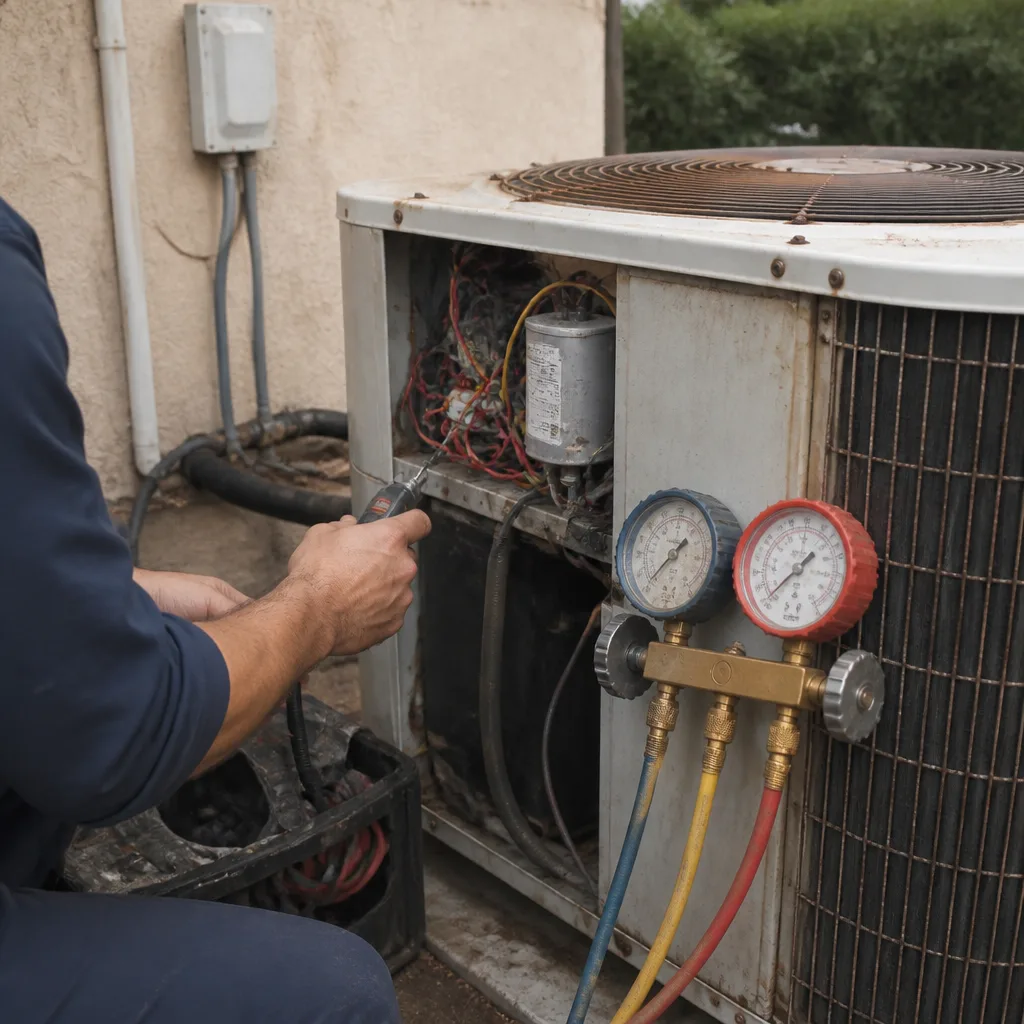 Before
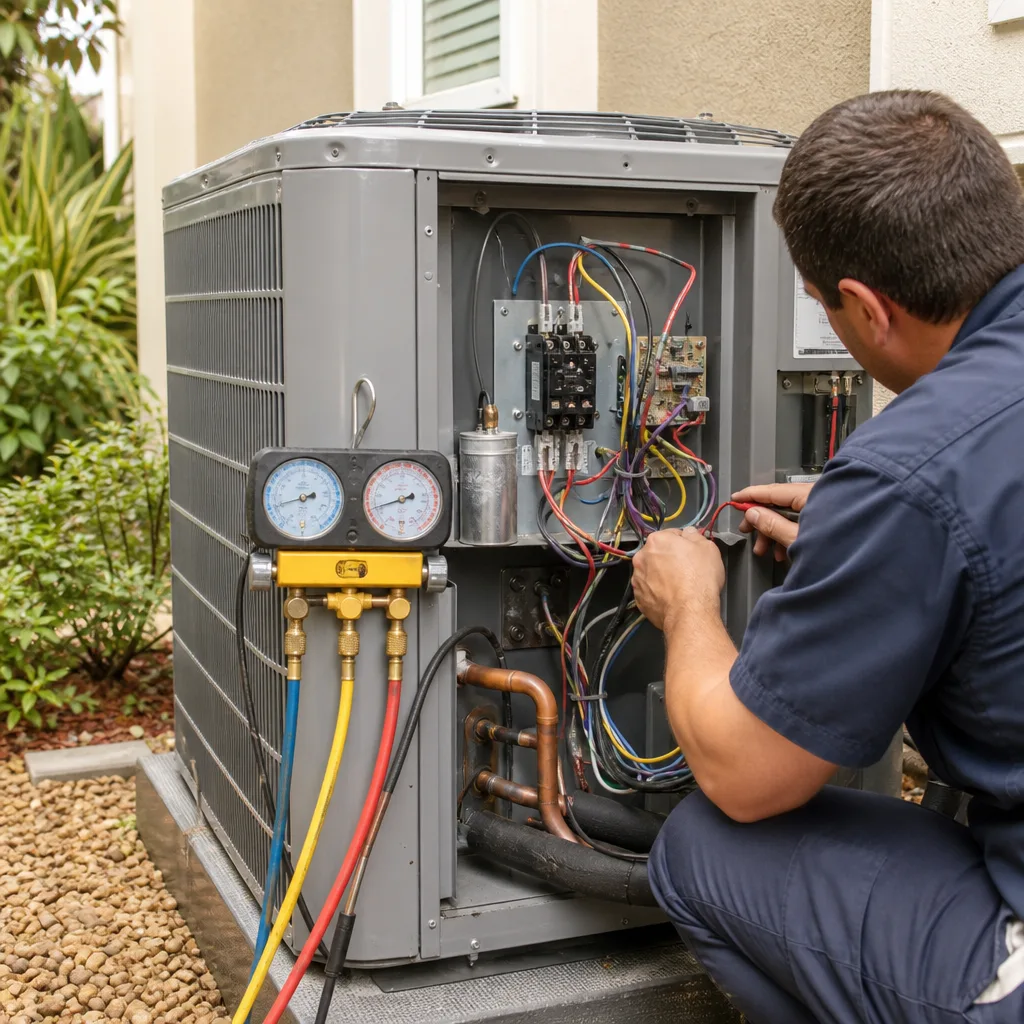 After
After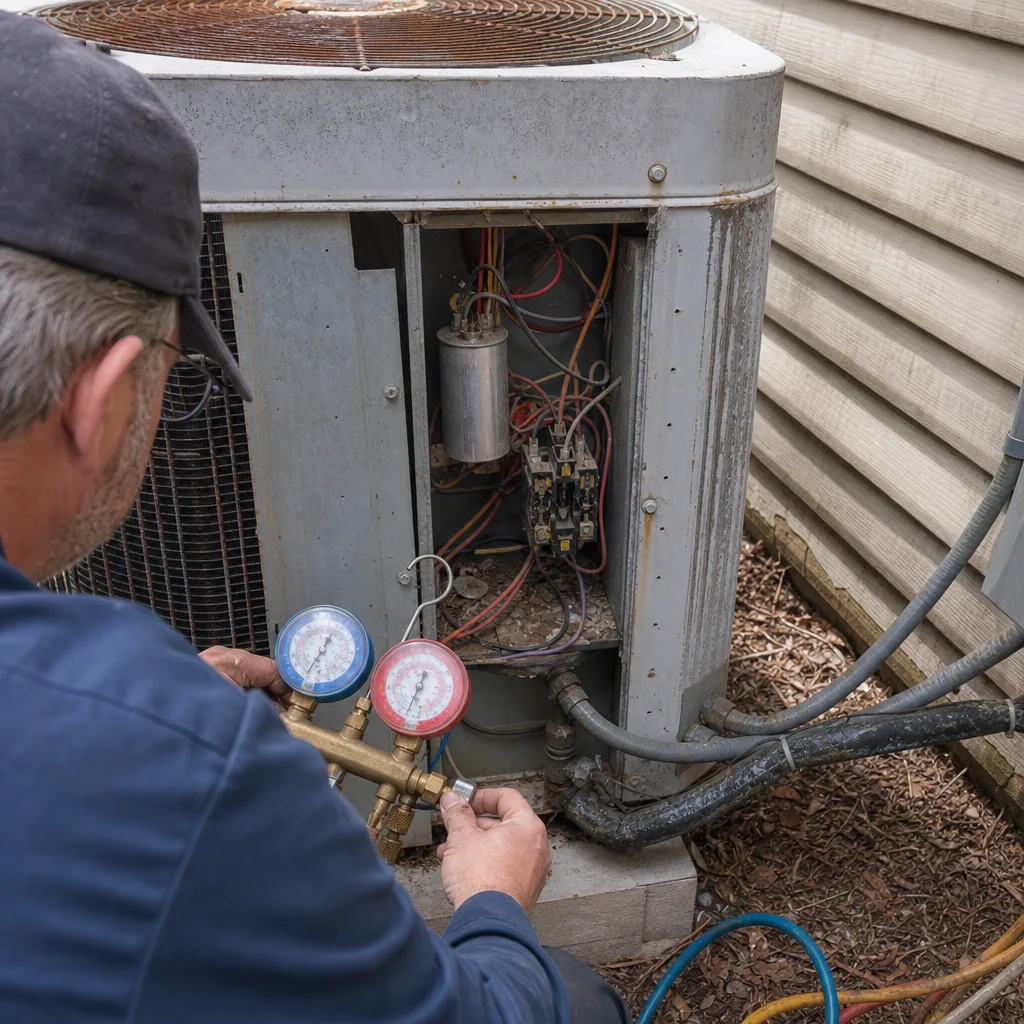 Before
 After
After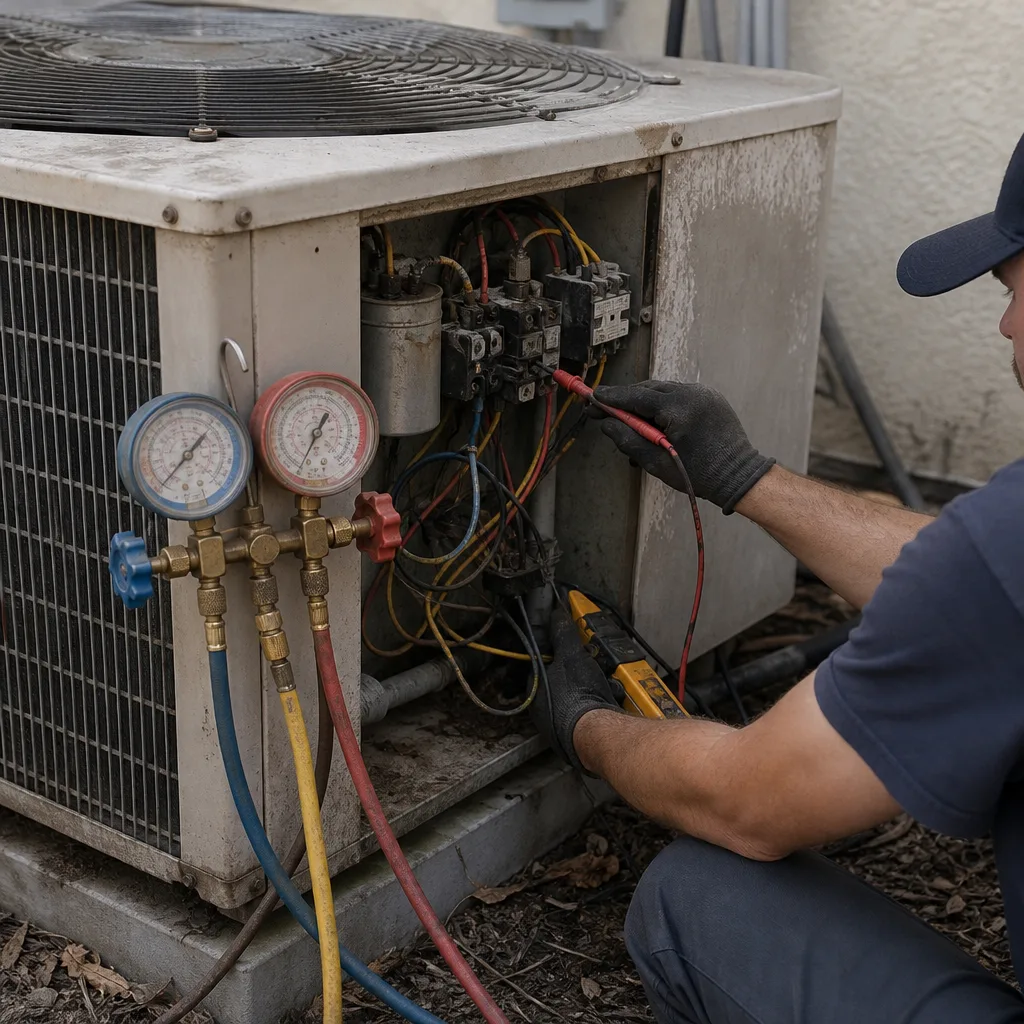 Before
 After
After